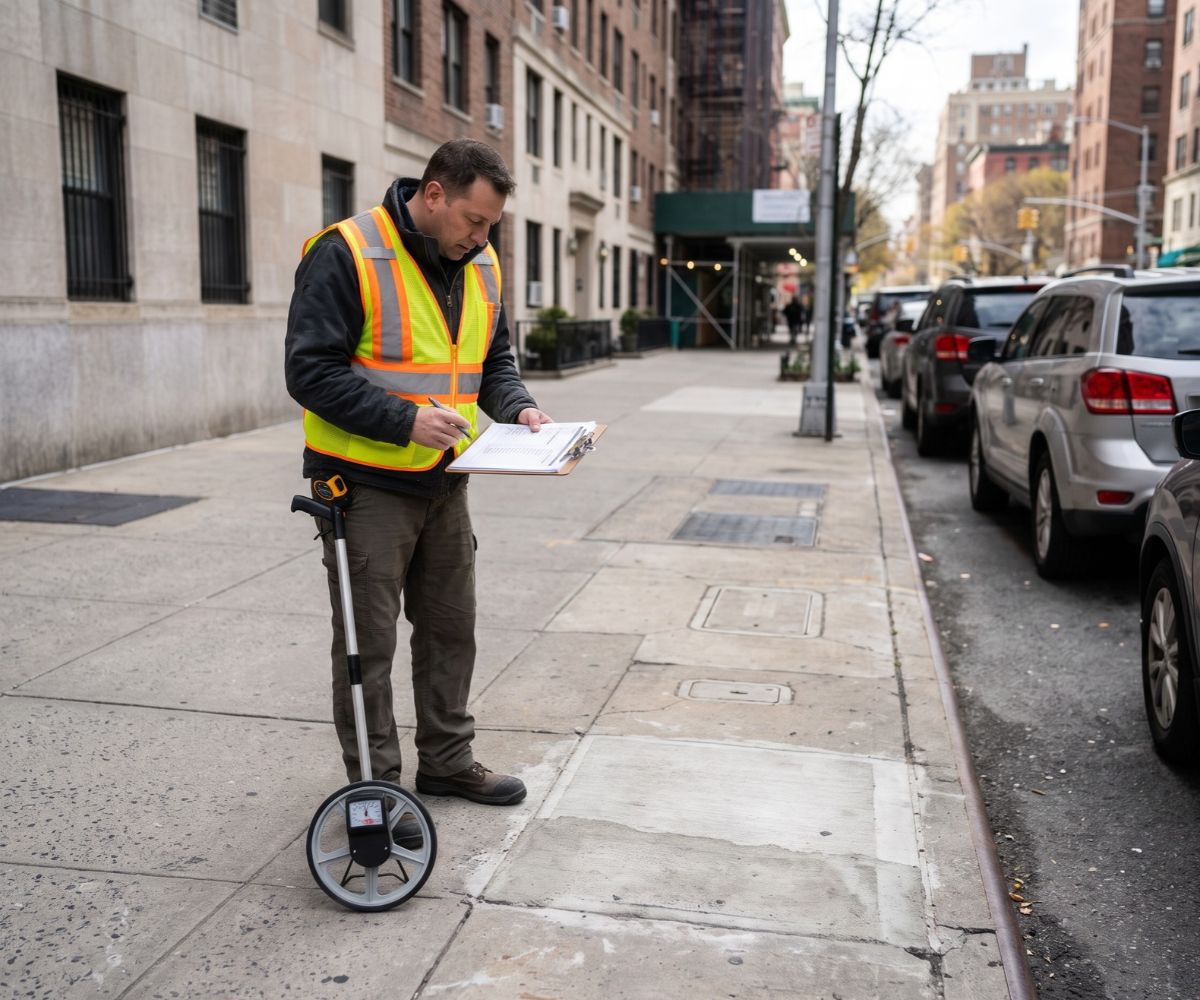
NYC Sidewalk Violation Dismissal Inspection: DOT Checklist
A dismissal inspection is the final step that clears a sidewalk violation. Once your repairs are finished, a NYC DOT inspector checks the work, and if it passes, the violation is removed from your property. To get there, you need a valid sidewalk permit, repairs that follow DOT specifications, a fully visible sidewalk, and a 311 request with the right details.
Why You Must Request a Dismissal Inspection After Repairs
Fixing the sidewalk does not close the violation on its own. The city must see the finished work and confirm it meets the rules. According to NYC311, if a licensed contractor completed the repairs under a valid sidewalk construction permit, you must request a dismissal inspection. The violation is removed once a DOT inspector confirms the work was done correctly.
This matters because a copy of the violation is filed with the County Clerk and stays there until the city confirms satisfactory repairs. An open violation or lien can complicate selling or refinancing your property.
The Six Items DOT Wants You to Confirm Before Inspection
DOT has published a one-page Sidewalk Repair Checklist for this step. Before you request an inspection, confirm that:
- A sidewalk permit has been obtained.
- All sidewalk defects have been removed.
- Expansion joints are placed between concrete of different thicknesses.
- Detectable warning surfaces (truncated domes) are installed if pedestrian ramps were repaired.
- The entire sidewalk is visible for the inspection.
- The inspection has been scheduled by calling 311 with the required information.
The sections below explain what each item means in practice.
Getting a Sidewalk Permit Before Repairs Begin
The permit comes first. If you hire a contractor, they should obtain all necessary permits before work begins. If you do the work yourself, you must follow DOT specifications and take out a permit as well. The permit number is also one of the details 311 asks for when you request the inspection.
The cost is $70 for every 300 linear feet of sidewalk on one property. This fee also covers the dismissal inspection, so you don’t pay separately for the final visit.
Fixing Every Defect Marked on Your Preliminary Inspection Report (PIR)
The Preliminary Inspection Report (PIR), the sketch that came with your violation, is the inspector’s guide. Every flag marked with a number on the PIR must be replaced and any defects corrected. DOT also recommends replacing freestanding flags, which are flags that become unattached once the neighboring defective flags are removed.
Before you call 311, walk the sidewalk with the PIR in hand and check off each numbered flag. A single missed flag is an easy way to fail. The repairs must also meet DOT’s specifications, so it’s worth choosing a licensed contractor who specializes in NYC sidewalk repair.
Expansion Joints and Truncated Domes
Two checklist items are easy to forget:
- Expansion joints. When new concrete meets concrete of a different thickness, place an expansion joint between them. This usually comes up near driveways, where the concrete is thicker than the regular sidewalk.
- Truncated domes on pedestrian ramps. If your repair includes a pedestrian ramp, such as on a corner property, detectable warning surfaces are required. These are the bumpy tiles that alert people with vision impairments that they are about to enter the street.
Ask your contractor about both before the job wraps up. It is much easier to fix them while the crew is still on site.
Keeping the Whole Sidewalk Clear and Visible for the Inspector
The inspector needs to see the entire sidewalk, so clear away anything that blocks the view, including parked equipment, construction materials, trash bins, and leftover debris. If part of the sidewalk can’t be seen, the inspector can’t confirm the work, and you may have to schedule again.
Scheduling the Dismissal Inspection Through 311
Once the repairs are done, call 311 and ask for a Sidewalk Violation Dismissal Inspection. If you did the work yourself, ask for “Sidewalk Violation Dismissal Request - Work Done by Owner.” Have these details ready:
- Your sidewalk permit number
- The property address
- Block and lot number
- The Notice of Violation number (4 to 6 digits, found on your violation notice)
- Your email address or other contact information
Having everything in front of you before you call keeps the request from being delayed. You can also check the details on the NYC311 portal.
What Happens After the Inspection
If the inspector confirms the work was done correctly, the violation is removed from the County Clerk’s official record. If something fails, you’ll need to correct it and request another inspection, so a careful walkthrough beforehand pays off.
If a lien has already been placed on your property, an extra step may apply. NYC311 says a sidewalk dismissal inspection may be required before a lien can be removed. In that case, call 311 and ask for the current steps.
Paperwork to Keep After Your Violation Is Dismissed
Once the violation is dismissed, keep a folder with:
- Your sidewalk permit
- The contractor’s invoice
- Photos of the finished sidewalk from a few angles
- Your inspection request and dismissal confirmation
A buyer’s attorney or title company may ask for these documents if the violation comes up during a sale or refinance.
Conclusion
Passing the dismissal inspection comes down to getting every detail right: the permit, every numbered flag on your PIR, the expansion joints and truncated domes, and a clear view of the whole sidewalk. Of all these, the repair itself matters most, and it needs to be done by a licensed, certified contractor who knows DOT specifications. When the work is built to those standards, the rest of the process tends to fall into place.
Follow the steps in order: get the permit, fix every marked defect, confirm the details that are easy to miss, and call 311 with your information ready. Done this way, the dismissal inspection is usually a quick final step rather than a source of stress, and your violation is cleared from your property record for good.
Need Help Passing Your Dismissal Inspection?
Not sure your repairs will meet DOT specifications, or want a licensed contractor to handle the work and guide you through the inspection?
Get a Free Estimate from Eden Sidewalk Repair NYC!