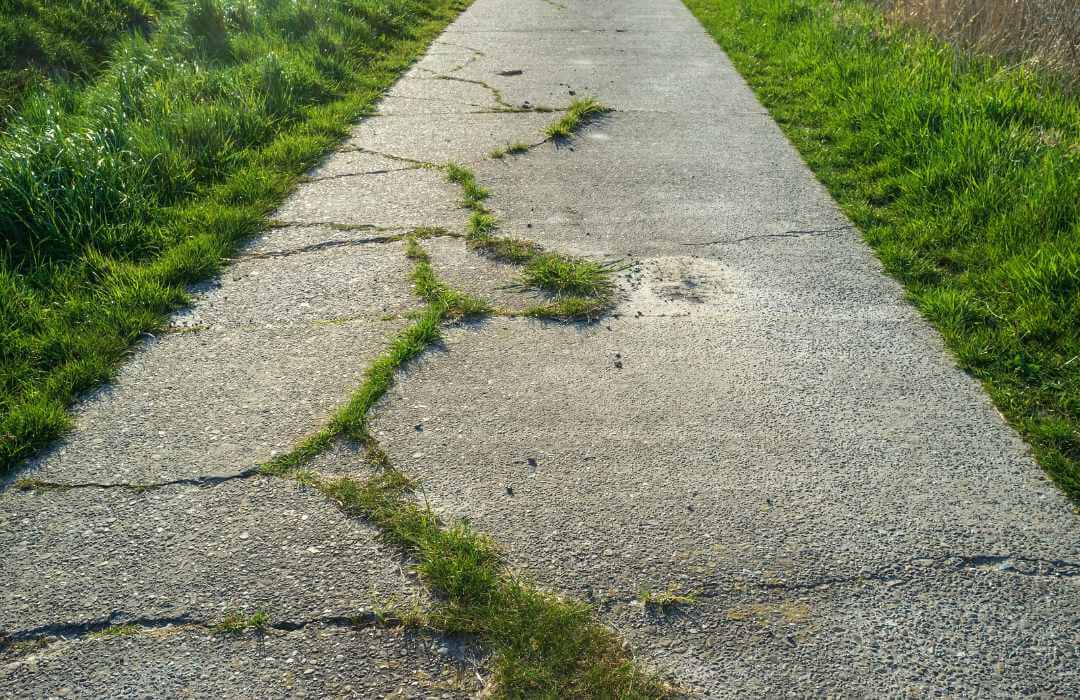
Why Do Sidewalks Crack?: 7 Real Causes & What NYC Property Owners Must Know
You've seen them everywhere, hairline fractures creeping across a sidewalk slab, raised edges that catch your foot mid-stride, wide gaps where two sections have drifted apart. Sidewalk cracking is so common in New York City that most pedestrians treat it as part of the landscape. But understanding why sidewalks crack is the difference between a minor repair and a costly replacement, or worse, a DOT violation and a lawsuit.
This guide covers every major cause of sidewalk cracking, explains why New York City's unique environment accelerates the problem, and tells you exactly what to do when you notice damage on your property. If you're already dealing with damage, professional sidewalk repair NYC services can help you address violations quickly and avoid liability.
1. Freeze-Thaw Cycles: New York's #1 Sidewalk Killer
In the Northeast, freeze-thaw cycles are the single biggest driver of concrete sidewalk deterioration. During a typical New York City winter, ground temperatures can swing above and below freezing multiple times in a single week. Each cycle pushes concrete through expansion and contraction, and this type of stress can cause slabs to heave upward, sometimes not settling back level after the thaw.
The problem compounds when water collects in joints between slabs. If those expansion joints are cracked or their sealant has degraded, water freely enters the gap, freezes, and turns a hairline crack into a full-width fracture. This is why sealing sidewalk joints before winter is one of the most cost-effective preventive steps a property owner can take.
NYC Tip:
A sidewalk that looks fine in October may show serious cracking by March after just one brutal winter. Schedule an inspection in late summer before freeze-thaw season begins.
2. Tree Root Intrusion: The Silent Sidewalk Destroyer
New York City has over one million street trees, and their roots are responsible for a significant share of sidewalk violations across all five boroughs. Species like silver maples, American elms, and willows are particularly aggressive. Even a small hairline crack, caused by another factor, invites root tips to infiltrate, and once inside, roots only grow wider, accelerating the damage exponentially.
Under Section 19-152 of the NYC Administrative Code, property owners are legally responsible for maintaining the sidewalk in front of their property, even when the damage was caused by a city-owned tree. That said, NYC Parks' Trees & Sidewalks Program offers free repairs for qualifying 1-, 2-, and 3-family owner-occupied homes when city tree roots are the proven cause.
For more on handling this specific issue, see our sidewalk repair NYC services including tree root damage assessment.
3. Soil Settlement & Poor Compaction
Settlement cracks are particularly common in areas that have seen recent utility work. When Con Edison, National Grid, or the DEP opens a trench to repair underground infrastructure and then backfills it, the new soil is rarely compacted to the standard of the original. The result is slow, predictable settlement that cracks the sidewalk above.
In Brooklyn and Queens, where older clay-heavy soils are prevalent, drought conditions during summer can cause the ground to dry out and shrink — creating voids beneath slabs. When fall rains return, the sudden rehydration causes soil to swell unevenly, further stressing the concrete above.
4. Excessive Weight & Heavy Loads
In dense urban areas like Manhattan and the Bronx, this is an extremely common problem. Delivery trucks routinely mount curbs. Construction cranes and equipment cross sidewalks during building projects. Even something as seemingly minor as a parked forklift can leave behind stress fractures that widen over subsequent freeze-thaw cycles.
NYC requires permits for any equipment that will drive over a sidewalk, but enforcement is imperfect. If your sidewalk was damaged by a contractor's equipment, document the damage immediately with photos and timestamps, this may support a claim against the contractor's insurance.
5. Water Infiltration & Poor Drainage
In coastal neighborhoods of Queens and Staten Island, flooding events can saturate the soil so completely that the base beneath sidewalk slabs washes away almost entirely. In these situations, the concrete slab may look intact from above while being completely unsupported below, a dangerous condition sometimes called a 'hollow' or 'bridged' slab.
Proper grading away from buildings, well-maintained gutters, and clear storm drains are among the most effective tools for extending sidewalk life in high-precipitation urban environments like New York City.
6. Poor Installation & Substandard Materials
NYC DOT specifies minimum standards for sidewalk concrete (generally C30 strength or higher), proper sub-base preparation, and expansion joint placement. Contractors who cut corners, using too much water to make the mix easier to pour, skipping base compaction to save time, or spacing joints too far apart, create sidewalks that may look fine on day one but begin cracking within the first year or two.
This is one reason why it pays to use a DOT-licensed sidewalk contractor rather than an unlicensed handyman. Licensed contractors are accountable to city standards and typically back their work with a warranty.
Important:
In NYC, sidewalk repairs must be performed by a DCA-licensed contractor. Attempting repairs yourself or hiring an unlicensed worker can result in the work being rejected during DOT inspection, meaning you'd pay twice.
7. De-Icing Chemicals
Calcium chloride and magnesium chloride de-icers, while gentler than sodium chloride (rock salt), still cause long-term damage with repeated application. Sand is a safer alternative for traction that does not chemically attack the concrete. If you must use chemical de-icers, use them sparingly and rinse the surface thoroughly in spring to remove residue.
For property owners in the Bronx and Staten Island, where heavy salting of adjacent roadways is common, sidewalk sealing every 2–3 years provides a meaningful barrier against salt-induced spalling and scaling.
Types of Sidewalk Cracks: What Each Kind Tells You
Not all cracks are created equal. The shape, width, and pattern of a crack provide valuable diagnostic information about its underlying cause and urgency.
Hairline Cracks (Surface Crazing)
These shallow, interconnected cracks resemble a spider web or cracked eggshell on the surface. They are usually cosmetic and result from improper curing during installation or minor surface shrinkage. While not immediately structural, they admit water and will worsen over time without sealing.
Linear / Transverse Cracks
Straight cracks running across a slab typically indicate thermal expansion stress, the slab expanded beyond the relief provided by its expansion joints and cracked to release pressure. These are very common in NYC and usually require crack filling or, if wide enough, slab replacement.
Heaving / Raised Cracks
When one side of a crack is visibly higher than the other, the slab has been lifted, almost always by tree roots or frost heave beneath. Raised edges greater than 1/2 inch are a tripping hazard and a DOT violation under NYC regulations. These require prompt attention.
Settlement Cracks / Sunken Slabs
A slab that has sunk below its neighbors indicates soil erosion or compaction failure beneath. Water pools in the depression, accelerating further damage. Depending on severity, these can be addressed with mudjacking/slab leveling or full replacement.
Corner Cracks
Diagonal cracks emanating from the corners of a slab often indicate point load stress, usually from heavy vehicles mounting the curb or from the sub-base failing at the weakest structural point. Corner sections may need to be removed and repoured with rebar reinforcement.
NYC Sidewalk Liability: What You Need to Know
New York City's sidewalk maintenance laws place the burden squarely on adjacent property owners, not the city. Under Administrative Code §19-152, you are responsible for keeping the sidewalk in front of your building safe and in good repair. If a pedestrian trips on a cracked or raised section of sidewalk in front of your property and is injured, you can be held liable for their injuries.
Trip-and-fall claims in NYC can result in settlements reaching tens of thousands of dollars. There are a few important exceptions and resources:
- Tree root damage (city trees): If a city-owned street tree caused the damage, NYC Parks may be responsible under the Trees & Sidewalks Program. Contact 311 to request an inspection.
- 1-, 2-, or 3-family owner-occupied homes: These properties may qualify for the Trees & Sidewalks free repair program.
- DOT violations: If you receive a violation notice, you have 75 days to complete repairs before the city steps in at your expense.
Sidewalk Repair Options: From Crack Filling to Full Replacement
Crack Sealing & Filling
For cracks narrower than 1/4 inch without vertical displacement, a qualified contractor can clean, dry, and fill the crack with a concrete sealant or polyurethane caulk. This prevents water entry and extends the life of an otherwise sound slab. This is the least expensive intervention and most appropriate for early-stage damage.
Slab Grinding
When one slab has heaved slightly above another (typically less than 1 inch) due to tree roots or frost, grinding down the raised lip creates a smooth, safe transition. It is far less disruptive and expensive than replacement and can remain effective for several years.
Mudjacking / Slab Leveling
Drill holes into a sunken slab, inject a concrete or polyurethane slurry underneath, and the slab rises back to its original level. Effective for settlement issues where the slab itself is intact. Less appropriate if the slab is extensively cracked or if tree roots will continue to push from below.
Partial Slab Replacement
Individual flagstones or damaged sections can be removed and repoured without replacing the entire sidewalk. This is the most common repair approach in NYC and is cost-effective for moderate damage. Eden handles all required DOT permits as part of the process.
Full Sidewalk Replacement
When a large portion of the sidewalk is compromised, extensive cracking, multiple settled sections, severe root damage, full replacement is the most practical and long-lasting solution. New concrete can be poured with improved sub-base preparation and updated expansion joint placement.
For driveway aprons and curb transitions, see our driveway repair and curb repair services.
Frequently Asked Questions
Q: Why do sidewalks crack in straight lines?
Straight transverse cracks typically occur when thermal expansion forces exceed what the expansion joints can accommodate. The slab expands in summer heat, has nowhere to go, and cracks perpendicular to the direction of stress. This is very common in long, uninterrupted runs of sidewalk concrete.
Q: Are the cracks between sidewalk sections supposed to be there?
Yes, those are intentional expansion joints cut or formed into the concrete during installation. They give the slab room to expand and contract with temperature changes without cracking. What's not supposed to happen is cracking within the slab itself, heaving, or settlement.
Q: Who is responsible for a cracked sidewalk in NYC?
Under NYC Administrative Code §19-152, the adjacent property owner is responsible for maintaining and repairing the sidewalk in front of their building. There is an exception for tree root damage caused by city-owned trees, which may be repaired through NYC Parks' Trees & Sidewalks Program.
Q: How much does sidewalk repair cost in NYC?
Costs vary by extent of damage and borough, but typical concrete sidewalk repair in NYC runs $12–$25 per square foot. Partial slab replacement for a standard residential property often falls in the $1,500–$5,000 range. Eden offers free estimates with no obligation.
Q: Can I repair my own sidewalk in NYC?
No. NYC requires that sidewalk repairs be performed by a DCA-licensed contractor who obtains the necessary DOT permits. DIY repairs or work by unlicensed contractors will not satisfy a DOT violation and may not pass inspection.
Q: How quickly do cracked sidewalks get worse?
In New York City's climate, a small crack can deteriorate rapidly. A hairline crack in fall can become a 1/2-inch gap with raised edges by spring after just one freeze-thaw season. Early intervention is significantly cheaper than waiting until the damage requires full slab replacement.
The Bottom Line
Sidewalks crack because concrete, strong as it is, must endure an unending assault from freeze-thaw cycles, growing roots, shifting soil, heavy loads, water, and chemical exposure, all while bearing the weight of a dense urban population. In New York City, these forces are intensified by the climate, the density of street trees, and decades of aging infrastructure beneath the streets.
The good news is that most cracking is predictable and, with the right professional attention, repairable. Early action is almost always cheaper, faster, and less disruptive than waiting.
For expert assessment and DOT-compliant repairs across all five boroughs, sidewalk repair NYC is what Eden Sidewalk Repair has been delivering for over 25 years. Call 718-577-5999 or visit the link above for a free estimate.