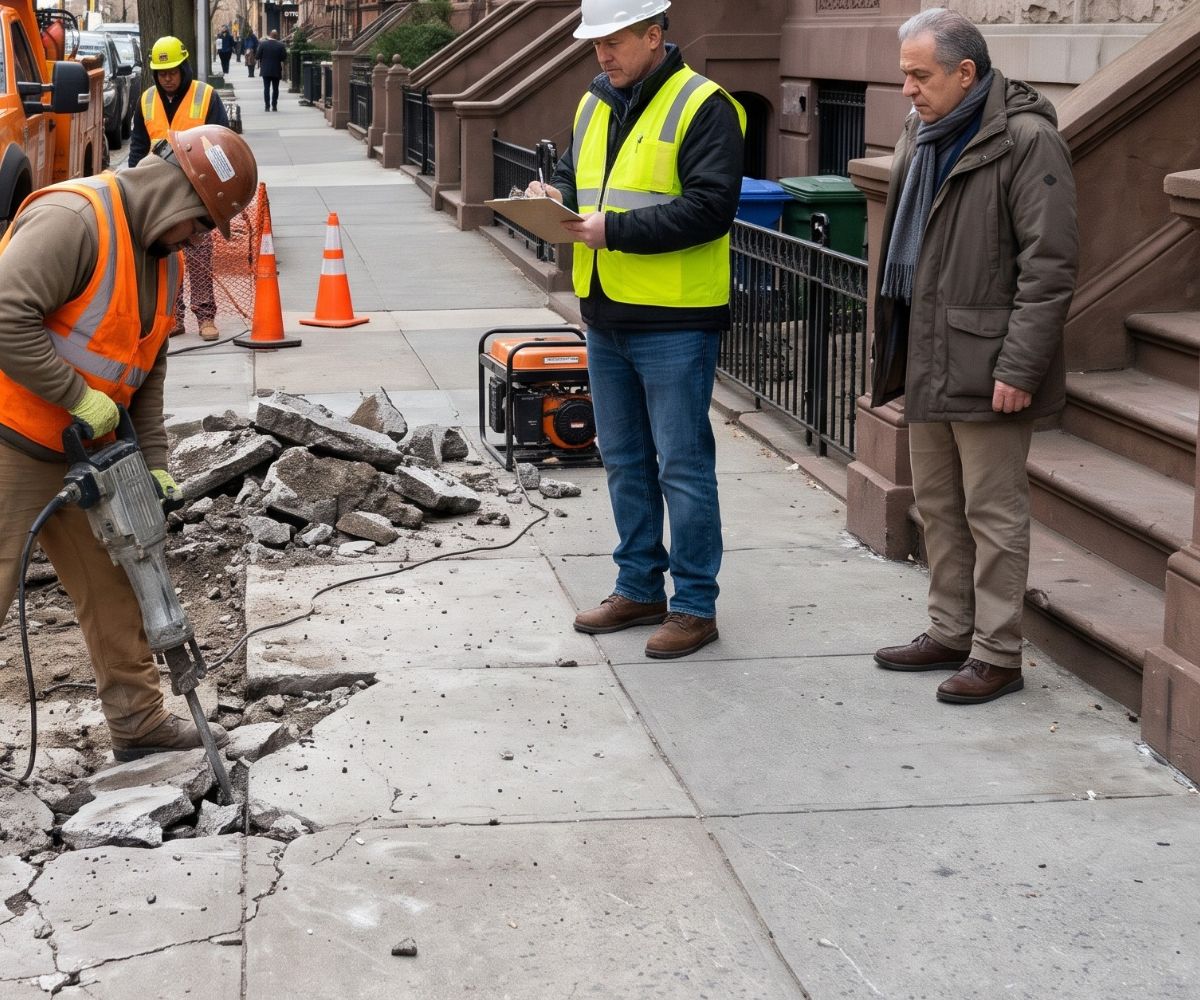
What Happens If You Miss the 75-Day NYC Sidewalk Violation Deadline?
If you miss the 75-day deadline, the New York City Department of Transportation can fix your sidewalk and send you the bill. There is no fine for the violation itself. But if you don’t pay the repair bill within 90 days, it becomes a lien on your property. A lien can make it hard to sell or refinance. So the deadline really marks the last day you get to choose your own contractor, your own schedule, and your own price.
When the 75 Days Begin
The 75 days start on the day you receive the notice. That date appears on your certified mail receipt. If the notice can’t be delivered by certified mail, the city mails it by regular mail and also posts a copy on your property. In that case, the day it is posted is day one.
Two things surprise many owners:
- Winter doesn’t give you extra time. The 75 days are the same all year. DOT says to schedule your contractor to start as soon as the weather allows.
- A permit doesn’t extend the deadline. Getting a permit doesn’t pause the clock. The repair work still has to start within the 75 days.
Still have time left on your 75-day window? Don’t wait until it passes. Let Eden Sidewalk Repair NYC take the work off your hands and get your sidewalk repaired before the city steps in.
What Happens After Day 75
After the deadline passes, DOT may do the repair itself or have one of its contractors do it. The key word is “may.” The city doesn’t have to act on a set date, and it often takes a while. In its September 2023 testimony to the City Council, DOT said that less than one percent of its sidewalk repairs over the past five construction seasons were done within 90 days of a notice.
That doesn’t mean you’re safe, though. The city’s right to step in doesn’t go away just because it is slow. If you wait, you simply won’t know when the crew will show up.
What You Give Up When the City Does the Work
If the city makes the repair, you lose control of the project. You can’t pick the contractor. You can’t choose when the work happens. And you can’t negotiate the price.
DOT’s sidewalk guide also says owners don’t get a formal notice before the crew arrives. A city representative takes photos of your sidewalk and marks the sections that need to be replaced. Then the work begins. Every section numbered on your Preliminary Inspection Report (the PIR, which is the sketch that came with your violation) must be replaced. Once the job is done, the city tells the County Clerk to remove the violation from your property. The bill comes after that.
How to Estimate the City’s Bill
You can get a rough idea of the cost before the bill arrives. Take the square footage listed on your PIR. Multiply it by the price per square foot printed in the letter that came with your violation. Use the 7-inch concrete price for driveway areas and the 4-inch price for everything else.
Keep in mind that this is only an estimate. DOT says the final bill can be higher if extra work is needed to meet its standards. The bill also includes a 20 percent administrative charge. You only pay for sidewalk sections that were actually defective. If a section on your PIR is marked with an “X,” it may be replaced for free.
When a Repair Bill Becomes a Lien
Once the work is finished, the Department of Finance sends you the bill. You have 90 days to pay it before interest begins to add up. If the bill stays unpaid after that, it becomes a lien on your property. And that lien can also stand in the way of selling or refinancing your property.
This is where many owners get caught off guard. Title companies, lenders, and attorneys check for liens during a sale. A lien that has been sitting quietly for months can suddenly become a big problem at closing. For background on the owner’s duty here, see who is responsible for sidewalk repairs in NYC.
If the bill is too much to pay all at once, you may qualify for a payment plan. You can apply at a Finance Business Center or call 311 and ask about the "Sidewalk Repair Payment Plan." The NYC Department of Finance sets the eligibility requirements and payment terms, so check with them before applying.
Can I Dispute the City Repair Bill
Yes, you can. If you disagree with the city’s work or the bill, you must follow three steps in order:
- Write to the DDC borough office: Explain exactly what you disagree with. It could be the quality of the work, the amount of work, or the measurements. Phone calls and walk-in visits don’t count as appeals.
- File a Notice of Claim with the Comptroller’s Office: You must do this within one year of getting the bill.
- File a petition with the Small Claims Assessment Review Part of the New York State Supreme Court: You can do this if 30 days have passed since you filed your claim and the Comptroller has neither decided nor denied it. The County Clerk’s office gives you the forms for free. There is a filing fee.
If you skip a step or do them out of order, your appeal may not count.
What to Do If Day 75 Is Near or Already Passed
The steps are the same no matter where you are on the timeline. If you’re past day 75, start by calling 311 to ask about the status of your violation. You’ll want to know whether the city has taken any action yet. If it hasn’t stepped in, don’t wait any longer.
Next, hire a contractor who knows the city’s sidewalk rules, holds a valid license, and has no pending customer complaints. Make sure the required permit is pulled before the repairs begin. Once the work is done, call 311 and ask for a Sidewalk Violation Dismissal Inspection, and keep the whole sidewalk clear so the inspector can see it.
Finally, keep good records. Take photos of the finished sidewalk, and save your permit, your contractor’s invoice, and your dismissal confirmation together. If a buyer’s attorney asks about the violation later, you’ll have proof ready.