
How We Restore a Retail Sidewalk on Livingston Street in Downtown Brooklyn, NY
Tree roots had pushed up the concrete, and shoppers had worn it down. Eden replaced the damaged sidewalk and rebuilt the chipped curb in front of a busy mixed-use building, kept the storefronts open during the work, and got every required sign-off.
Project Snapshot
- Location: 318 Livingston Street, Downtown Brooklyn, Brooklyn, NY 11217
- Property type: Mixed-use commercial property with ground-floor retail storefronts
- Issue: Cracked and broken concrete slabs, surface wear, chipped curb edges and uneven sections caused by tree root damage and heavy pedestrian traffic
- Scope: Removal and replacement of 8 concrete sidewalk slabs, approximately 200 sq. ft., plus repair of the chipped and deteriorated curb along the frontage
- Permits and approvals: NYC DOT Sidewalk Repair Permit, Sidewalk Closing Permit, 811 Utility Mark-Out Ticket, and coordination with NYC Parks where required
- Estimated cost: Approximately $5,300, including permits and approvals
- Timeline: Up to 60 days, covering sidewalk and curb repairs, permit coordination, required inspections, and final sign-off from NYC DOT and NYC Parks where applicable
- How they found us: Google search
A Storefront Sidewalk That Had Stopped Keeping Up
Livingston Street is one of Downtown Brooklyn’s busiest retail streets. Shoppers, office workers, and commuters walk past these storefronts all day. The owner of 318 Livingston Street found Eden through a Google search after the sidewalk had started to fail. Slabs were cracked and broken, the surface was worn, and the curb edges were chipped. Several sections no longer sat level with each other.
For a building whose ground floor depends on retail customers, that’s a real problem. Customers stepping over raised edges and broken concrete create a trip hazard and a liability risk. In New York City, the owner of the adjoining property is responsible for keeping the sidewalk in safe condition and paying for repairs. The owner wanted the frontage fixed properly and handled by one contractor from permits to final sign-off.
Two Forces Working on the Same Concrete
The damage on this frontage came from two sources: one below the slabs and one on top of them.
Below the surface: Roots from a nearby street tree had spread under the sidewalk. As they grew thicker, they lifted parts of the concrete out of line. That caused the uneven sections and some of the broken slabs.
On the surface: Constant foot traffic took care of the rest. Each crack that formed was ground wider by thousands of daily footsteps, and water got in and weakened the concrete further through each winter. The surface wore down, edges chipped, and slabs that were already stressed by the roots broke apart.
The curb showed the same wear. Its edges were chipped and crumbling, leaving a rough, uneven drop where people step off the sidewalk into the street. Fixing the slabs without the curb would have left the frontage only half repaired, so the curb was added to the scope. We found 8 slabs past the point of patching and left the sound concrete alone. That kept the scope focused and the cost under control.
Measuring the Frontage and Setting a Firm Price
Our estimator walked the full frontage, measured each damaged slab, recorded the height differences, and checked the condition of the curb from end to end. We also noted where the tree roots were affecting the sidewalk. The scope came to 8 slabs, about 200 square feet, plus curb repair along the storefronts. The estimate was about $5,300, with permits and approvals included. The owner got one clear figure instead of separate bills for filing, inspections, and construction.
Lining Up the Approvals
No concrete was removed until the paperwork was in order:
- NYC DOT Sidewalk Repair Permit: authorizes the replacement of the damaged slabs
- Sidewalk Closing Permit: allows a controlled work area on a heavily used pedestrian route
- Curb Repair Permit: authorizes removing and rebuilding the damaged curb sections along the frontage
- 811 Utility Mark-Out Ticket: marks underground utility lines before any digging
- NYC Parks coordination: needed because a City street tree was involved, so the work near its roots followed Parks requirements
On a busy street like Livingston, getting these approvals in place early helps avoid delays once the crew is on site.
Keeping the Shops Open During Construction
Shutting down the sidewalk in front of working stores wasn’t an option, so the work was planned around the businesses. We fenced off only the section being worked on, kept a marked walkway open for pedestrians, and maintained access to the storefront entrances. Noisy and dusty work was scheduled to cause as little disruption as possible to the shops and their customers.
How the New Sidewalk and Curb Went In
- 1. Cutting out the damaged sections. We sawcut along the edges of the 8 damaged slabs and the deteriorated curb sections so the neighboring concrete stayed clean and undamaged.
- 2. Removing the broken concrete. The old slabs and crumbling curb pieces were broken up and hauled away, exposing the ground underneath and the roots that had been lifting it.
- 3. Working around the tree. With the base exposed, the crew handled the area near the street tree in line with NYC Parks requirements, protecting the tree while preparing a stable surface for the new concrete.
- 4. Preparing a solid base. We leveled and compacted the base so the new slabs would have even support and stay flat under heavy foot traffic.
- 5. Repairing the curb. The chipped and deteriorated curb sections were rebuilt to the correct height and alignment. A solid curb protects the edge of the new sidewalk and gives pedestrians a clean, even step down to the street.
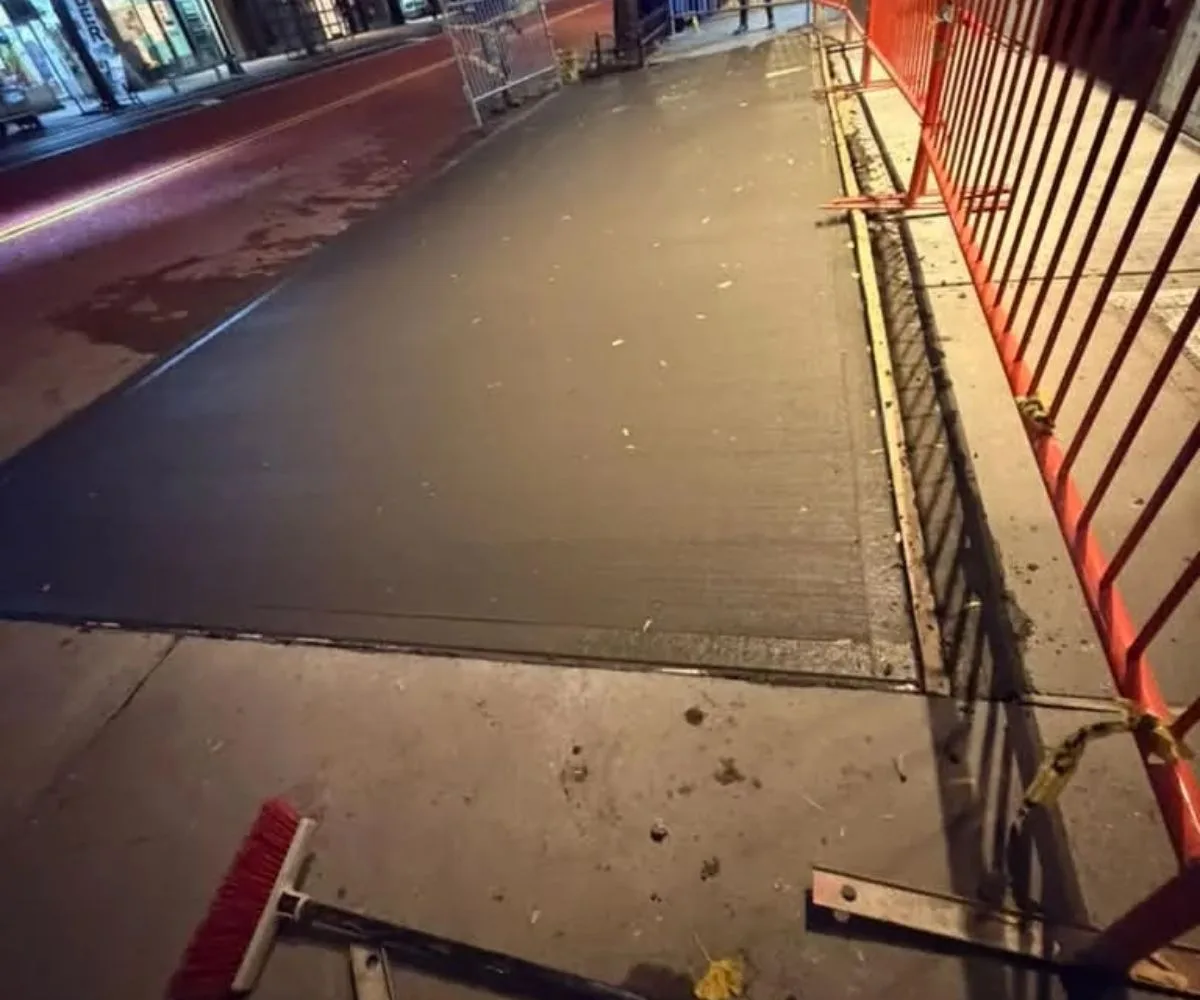
- 6. Pouring and finishing. New concrete was poured across about 200 square feet. The slabs were aligned with the surrounding sidewalk and the newly repaired curb, sloped to drain toward the street, given a slip-resistant finish, and jointed to limit future cracking.
- 7. Letting the concrete cure. The new sidewalk and curb stayed closed to foot traffic until they had properly cured, so they would be strong enough for Livingston Street’s daily crowds.
- 8. Inspection and sign-off. After curing, we arranged the required inspections and coordinated final sign-off with NYC DOT and NYC Parks where applicable. That closed out the project without the owner having to deal with any of the agencies.
The Finished Frontage

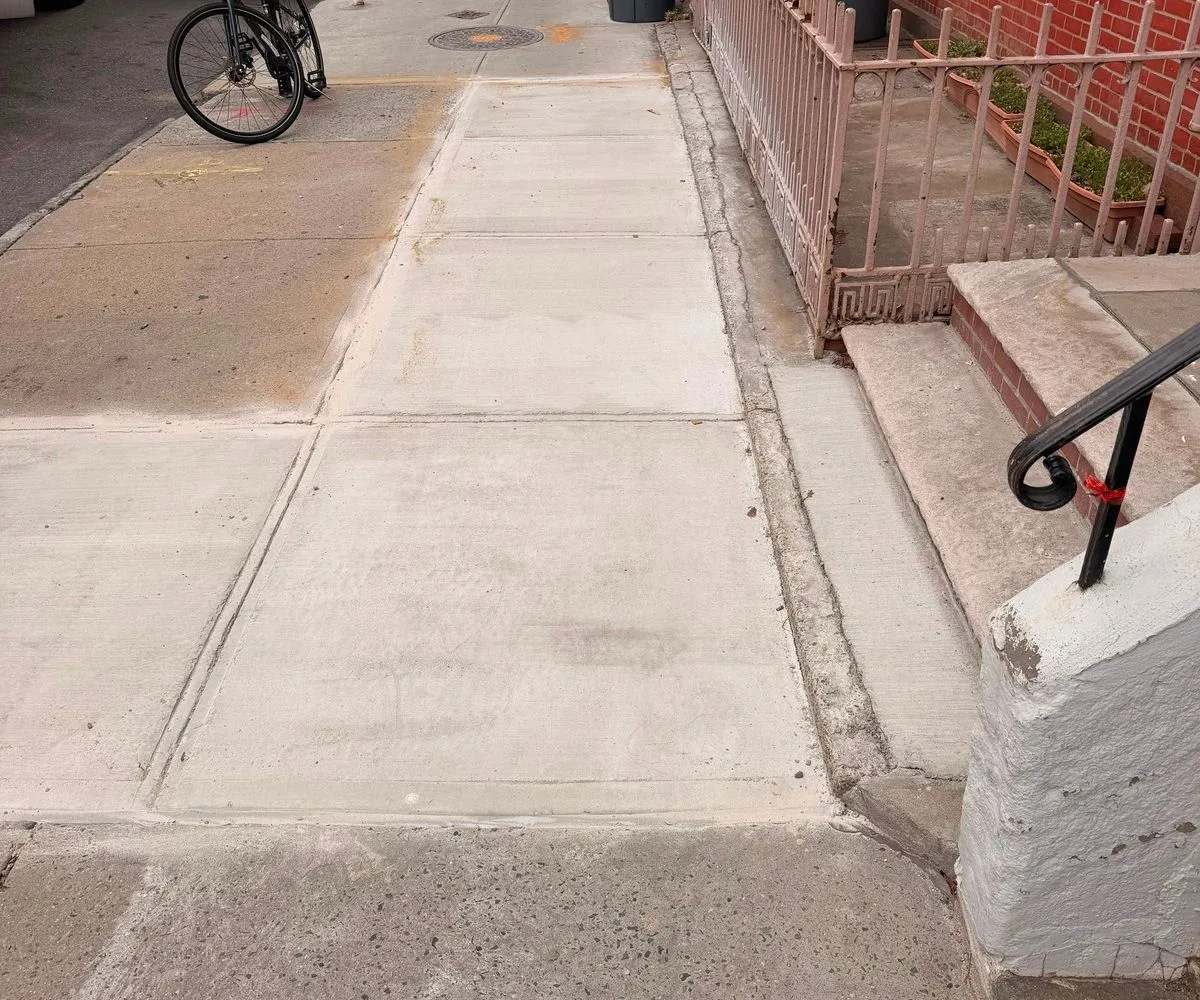
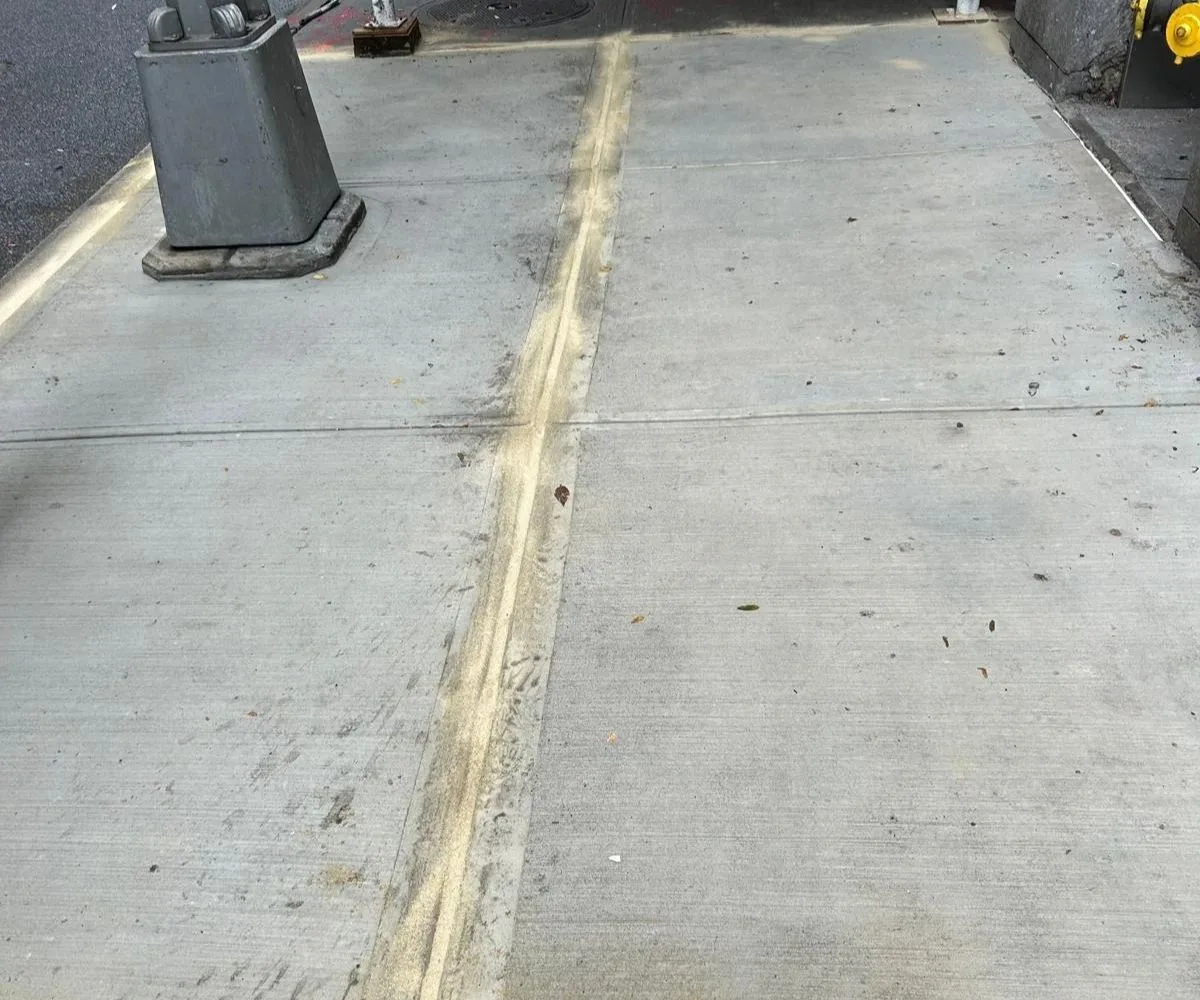
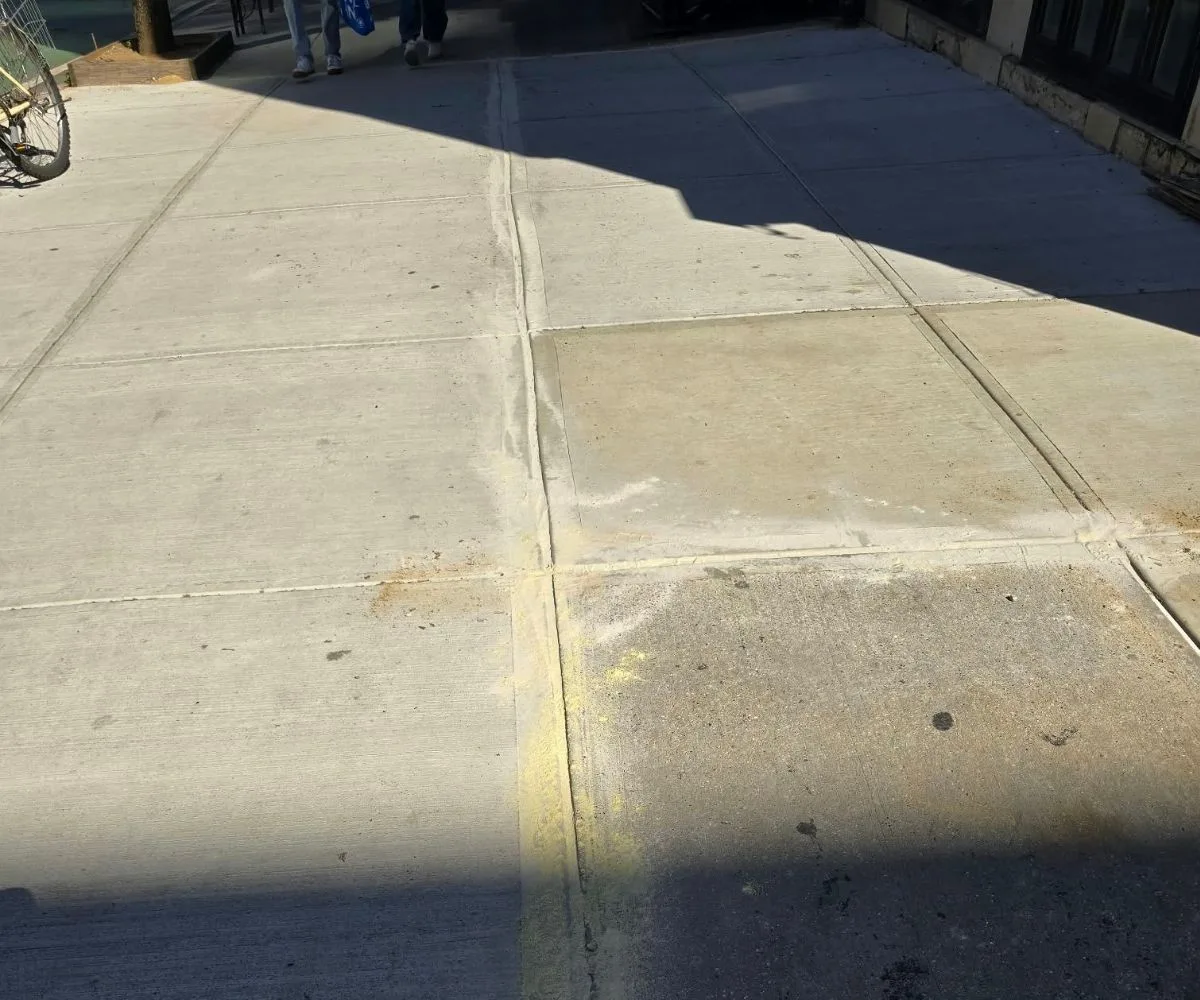
Eight slabs, about 200 square feet, were replaced on a new compacted base, and the chipped curb was rebuilt along the frontage. The broken concrete, worn surface, crumbling curb edges and uneven sections are gone, and the storefronts now have a level sidewalk and a clean curb line along their entrances. The project was finished, inspected and signed off within the 60-day timeline for about $5,300, including permits and approvals.
In the Owner’s Words
“Our sidewalk and curb were cracked and uneven right in front of our stores. Eden handled the permits, replaced the slabs, fixed the curb and kept our shops open the whole time. It looks great now.”
Cracked Sidewalk Outside Your Storefront? Eden Can Help
A damaged sidewalk on a busy commercial street affects safety, liability and how your building looks to customers. Eden Sidewalk Repair handles the whole process, from inspection and permits to Parks coordination, sidewalk and curb replacement, and final sign-off, while keeping your business open.
Have cracked, lifted or uneven concrete or a damaged curb in front of your property? Contact Eden today for an inspection and a repair estimate.
Call: 718-577-5999 Schedule a Consultation