
Tree Root Damaged Sidewalk Repair Outside a Queen Anne Townhouse on East 95th Street, Carnegie Hill
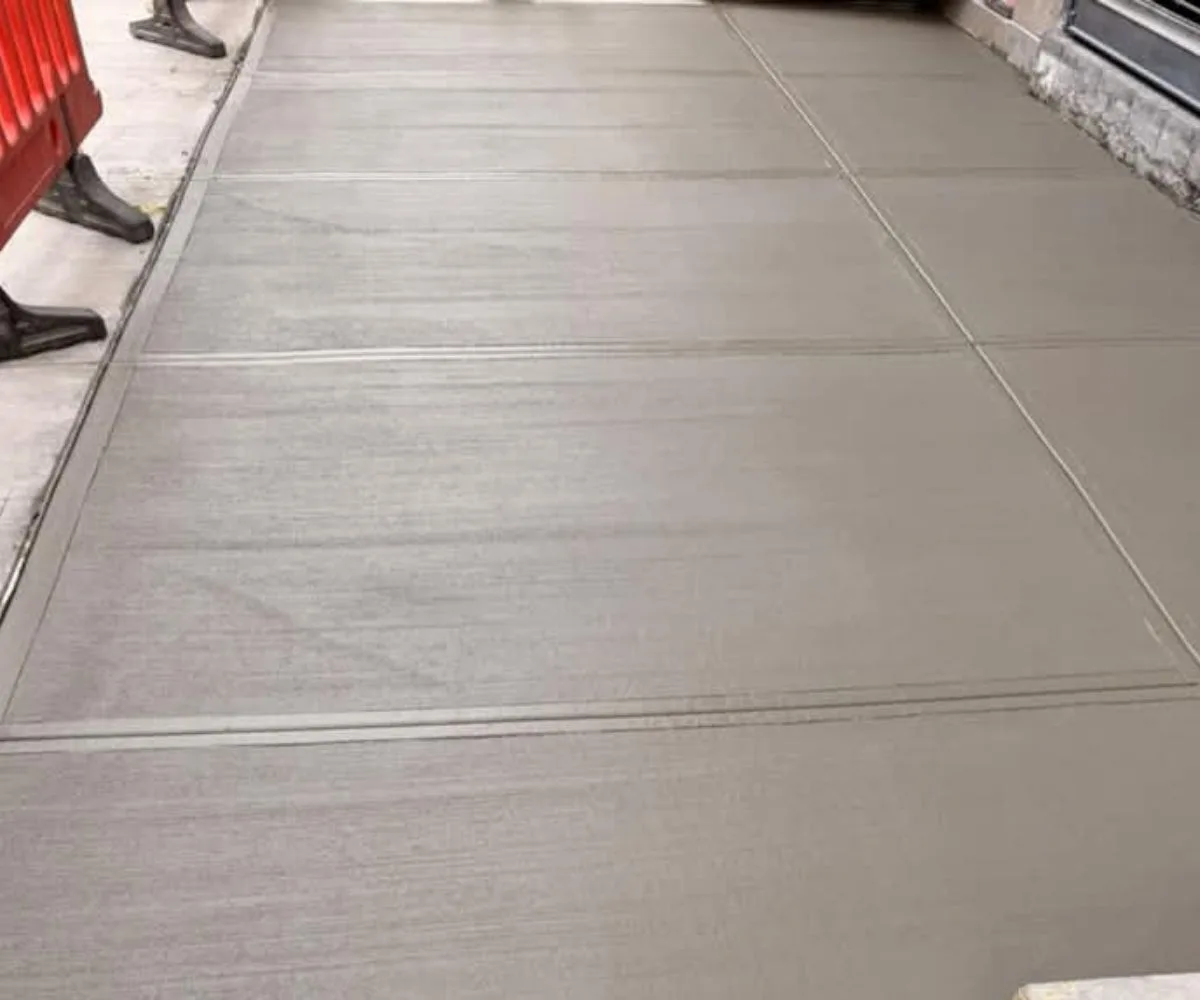
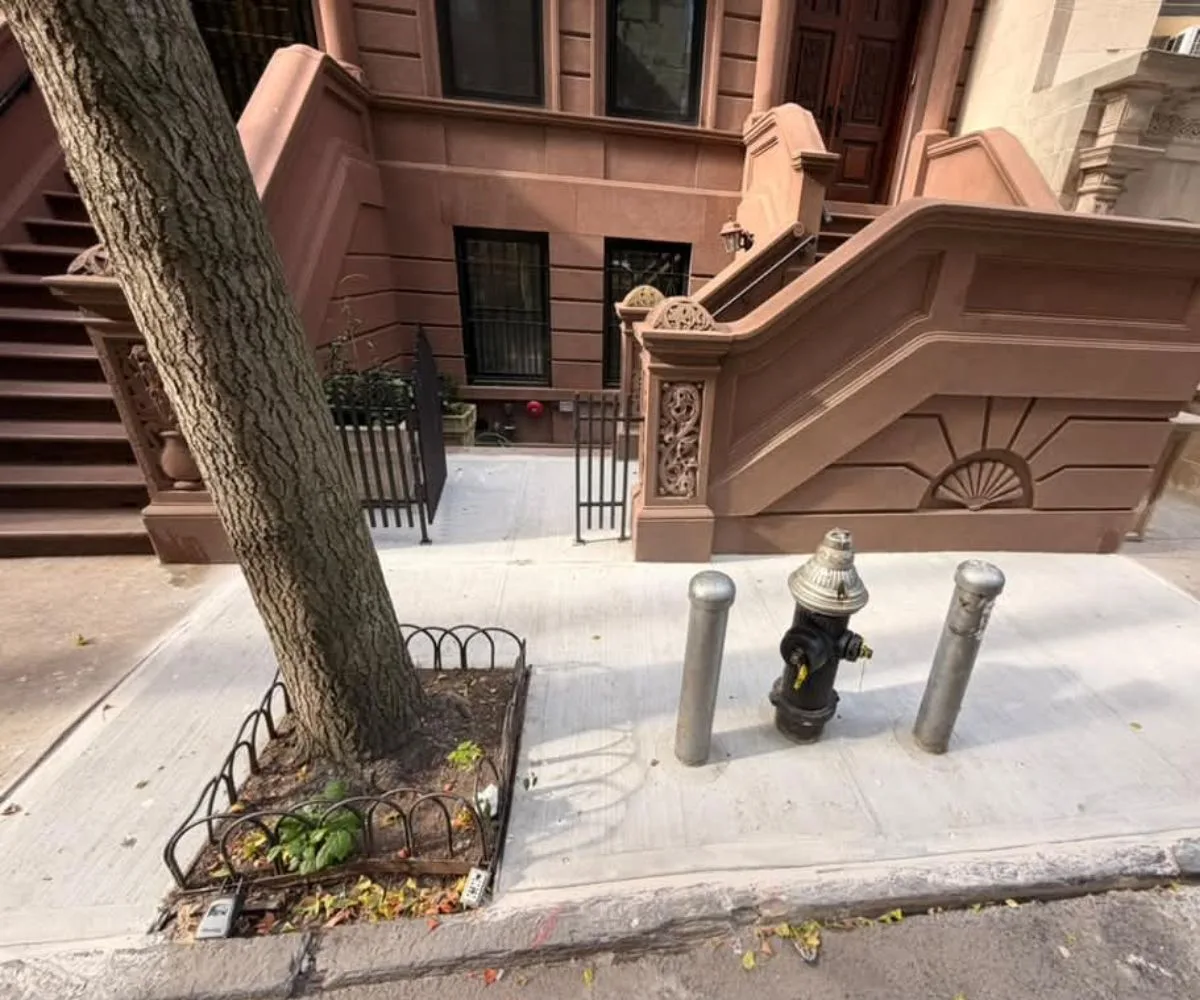
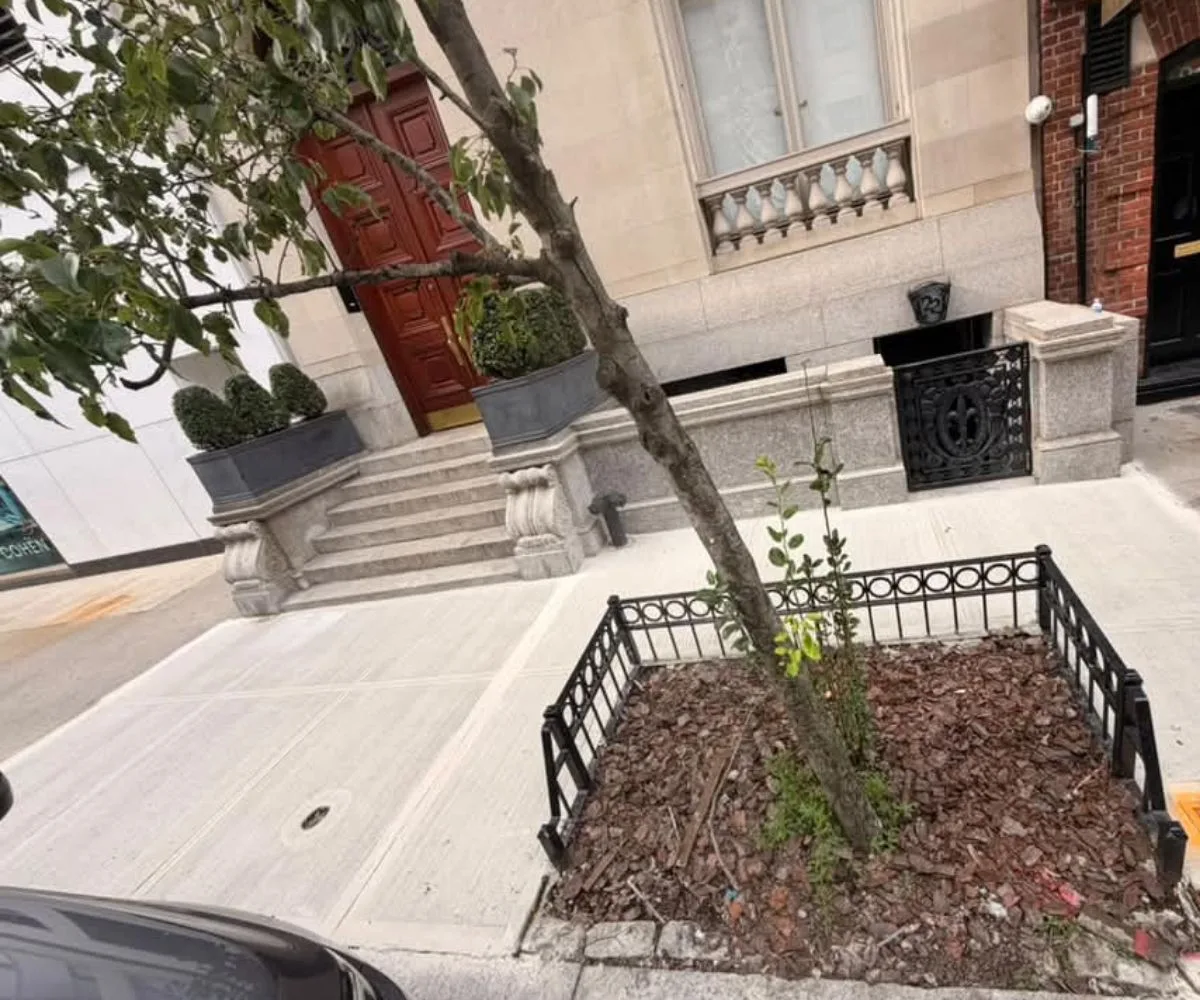
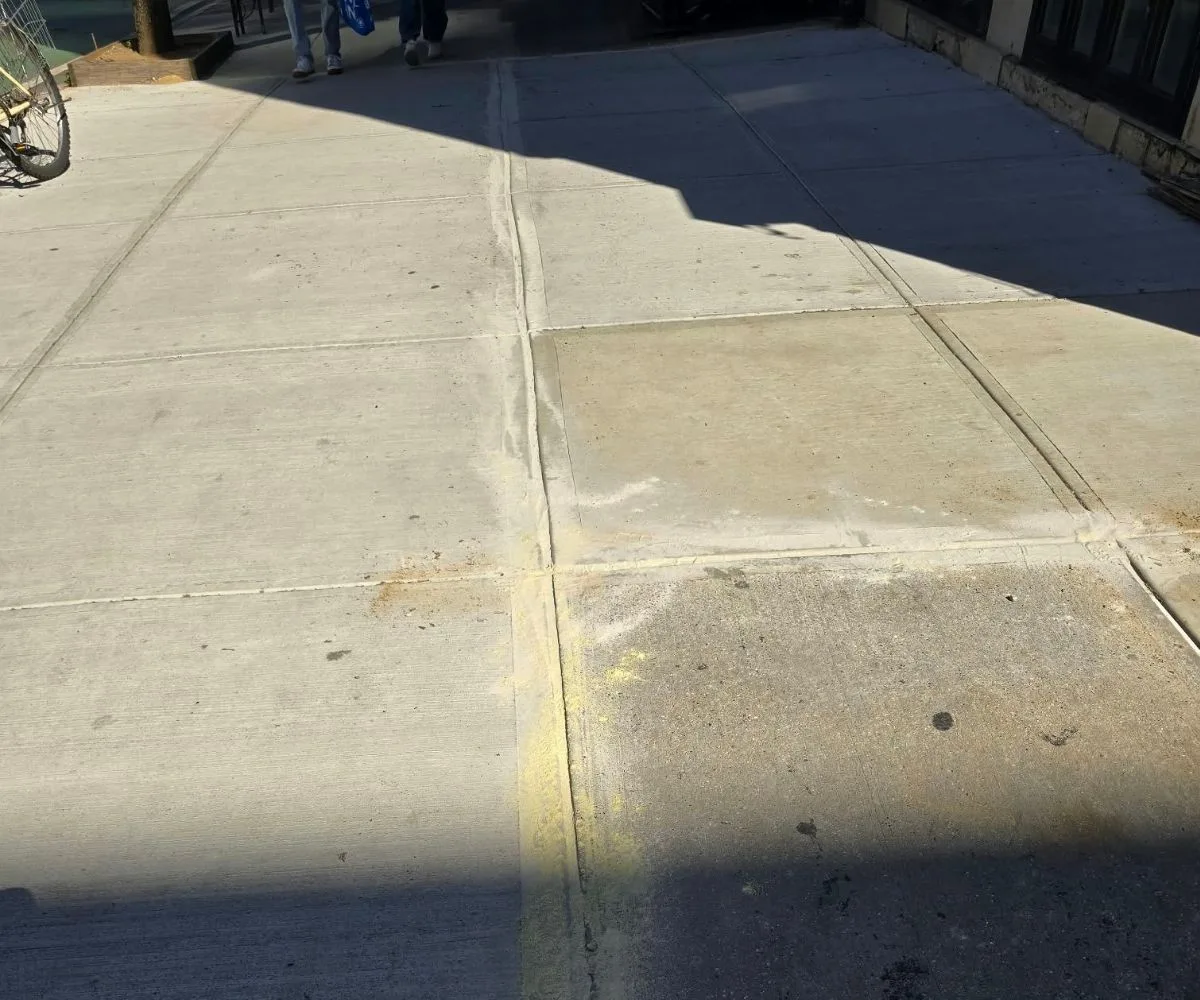
Outside 138 East 95th Street, a mature street tree, aging concrete, and decades of foot traffic had broken up the sidewalk in front of a single-family townhouse. Eden Sidewalk Repair NYC replaced 16 damaged flags, about 400 square feet, at roughly $19 per square foot, including permits, for an estimated total of $7,600. The project took up to 60 days from permits to the NYC DOT sign-off that closed the owner’s sidewalk violation.
The house sits on the block between Park and Lexington Avenues inside the Expanded Carnegie Hill Historic District. That meant checking the historic district rules before anyone ordered concrete. The tree out front was the other complication: its roots had lifted the flags, but the tree had to stay healthy through the repair.
The 138 East 95th Street Job by the Numbers
- Client: Residential property owner
- Address: 138 E 95th St, New York, NY 10128
- Neighborhood: Carnegie Hill, Upper East Side, Manhattan
- Property: Single-family Queen Anne townhouse, built around 1888, in the Expanded Carnegie Hill Historic District
- Flags replaced: 16
- Repair area: About 400 sq ft
- Cause of damage: Mature tree roots, aging concrete, and years of foot traffic
- Cost: About $19/sq ft + $140 permits, about $7,800 total
- Timeline: Up to 60 days, covering permits, historic district review, concrete work, inspection, and DOT sign-off
The Challenges Behind a 16-Flag Repair on East 95th Street

Sixteen flags is a routine number for a sidewalk crew. What made this job harder was everything around the concrete: a protected tree, a landmarked block, a fixed City deadline, and a family living behind the work zone.
DOT’s 75-day repair window kept running while NYC Parks reviewed the tree work, which typically takes up to 45 days, so every approval had to be filed at the start. The historic district raised the question of a landmark permit, which we had to rule out before ordering materials. The roots couldn’t be cut freely, yet the new flags still had to sit within DOT’s half-inch trip-hazard limit. And because the family lived in the house throughout, the crew worked in sections to keep the front steps reachable.
From Permits to Sign-Off: Our Work on East 95th Street
Here is how we played with the job from start to finish.
- Matching the violation to the frontage. We started with the Preliminary Inspection Report that came with the violation. NYC DOT requires every flag marked with a number on that sketch to be replaced, and we confirmed 16 flags across about 400 square feet.
- Lining up approvals. We filed for the DOT sidewalk permit, which costs $70 for every 300 linear feet of sidewalk, requested the 811 utility mark-out, and coordinated the NYC Parks tree work authorization. We did this early because DOT's 75-day repair window keeps running while permits are pending.
- Removing the damaged concrete. The crew broke out and hauled away all 16 flags, working carefully near the tree bed and leaving access to the townhouse's front steps and entry.
- Rebuilding the base around the roots. With the roots exposed, we prepared the subgrade following the Parks guidelines for this tree so the new sidewalk would sit level without forcing the roots.
- Pouring to DOT specifications. New flags were placed at the 4-inch thickness on a 6-inch base required by City, finished to match the neighboring sidewalks, and jointed where DOT expects. The DOT dismissal checklist calls for expansion joints at least every 20 linear feet, at each property line, and where the sidewalk meets the curb.
- Curing, inspection, and dismissal. After the concrete cured, we cleared the frontage so the whole sidewalk was visible and requested the dismissal inspection through 311. DOT inspected the work and signed off, and the violation was dismissed.
Client Testimonial
“Honestly dreaded dealing with the sidewalk violation, but Eden made it painless. They sorted out all the paperwork, including the tree and the historic district stuff, and kept the front steps usable the whole time. The sidewalk looks brand new, nothing about the tree got harmed, and the violation was gone before I knew it. Would hire again.”
A Restored Frontage That Fits Its Historic Block
The sidewalk outside 138 East 95th Street now has 16 new flags across about 400 square feet, laid level and built to DOT specifications. The trip hazards left by roots, age, and foot traffic are gone. The repair came together because each layer of rules was checked before work began: the historic district guidance confirmed what Landmarks did and didn’t regulate, NYC Parks authorization covered the work near the street tree, and DOT’s permit and dismissal steps closed the violation. For about $7,600 and up to 60 days, the owner got a clean violation record, a healthy tree, and a sidewalk that suits a Queen Anne townhouse on one of Carnegie Hill’s landmarked blocks.
Have a sidewalk damaged by tree roots or an open DOT violation? Contact us for an inspection and repair estimate.
Call: 718-577-5999 Schedule a Consultation