
Tree Root-Damaged Sidewalk Repair and Historic District Compliance at 22 E 67th St, Upper East Side, Manhattan, NY, USA
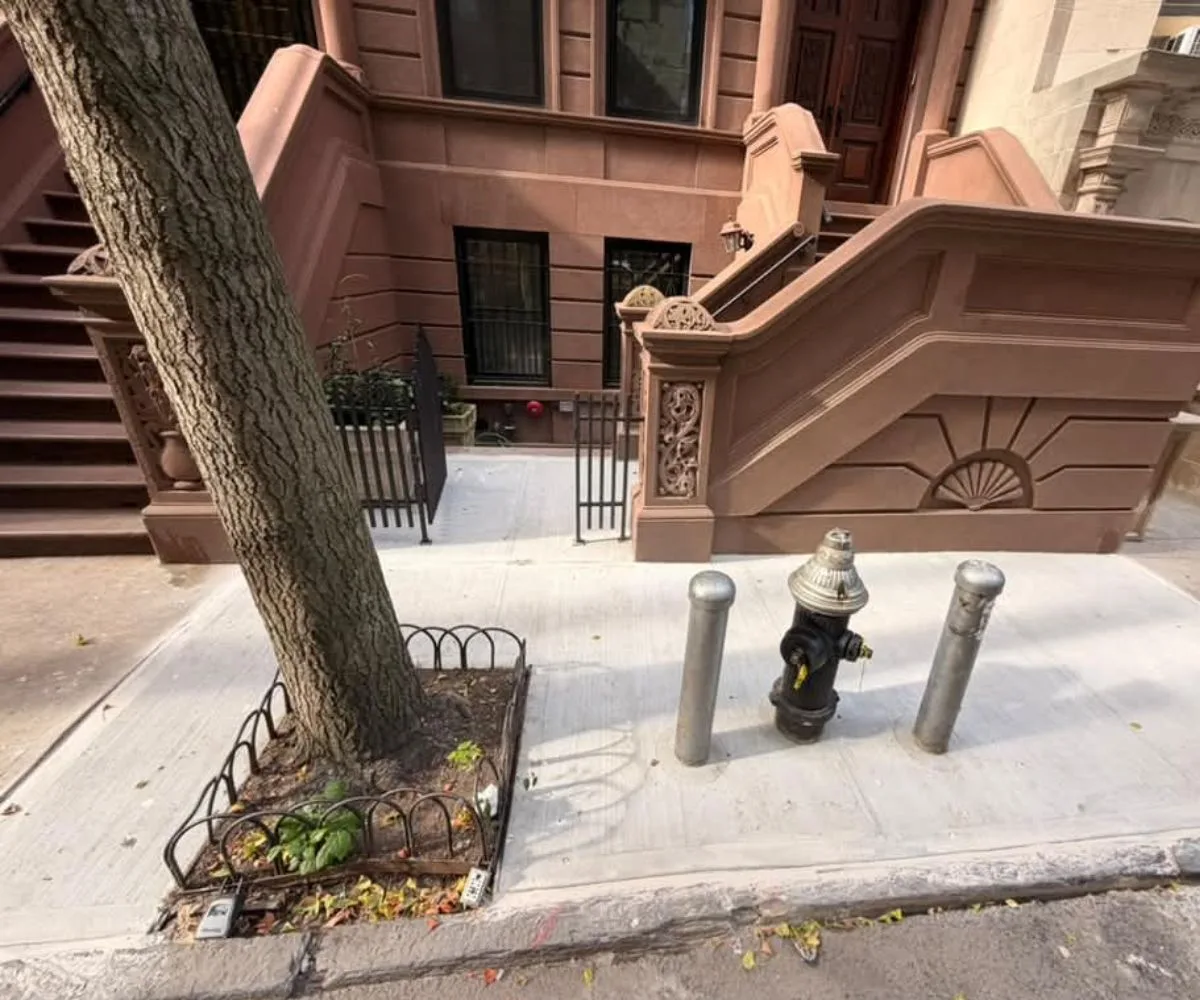
A historic Upper East Side townhouse sidewalk, lifted and cracked by decades of tree root growth, restored to grade without harming the tree or disturbing the protected streetscape around it.
Project Overview
- Location: 22 E 67th St, Upper East Side, Manhattan, NY 10065
- Property type: Residential historic townhouse within the Upper East Side Historic District, near Central Park
- Issue: Slab heaving and cracking caused by intrusion from a nearby street tree’s root system
- Scope: 11 slabs, approximately 275 sq ft
- Permits and approvals: NYC Parks Tree Work Permit, NYC DOT Sidewalk Repair Permit, Sidewalk Closing Permit, 811 Utility Mark-Out Ticket, NYC Landmarks Preservation Commission approval for material selection
- Estimated cost: About $6,000, permits and approvals included
- Timeline: Up to 60 days, work sequenced around root pruning, root barrier cure, and coordinated sign-off from DOT, Parks, and LPC
- How they found us: Referral from a neighboring homeowner in the historic district
The Challenge: A Protected Tree and a Protected Block
The sidewalk fronting this Upper East Side townhouse had been pushed out of alignment for years before the homeowner called us. Eleven slabs had heaved, tilted, or cracked as the root system of a mature street tree spread beneath them, and the unevenness had reached the point where it was a genuine trip hazard rather than a cosmetic issue.
Ordinarily, a repair like this is a matter of removing the bad slabs and pouring new ones. This one carried two extra layers of oversight. The property sits inside the Upper East Side Historic District, so any visible change to the sidewalk material or finish needed Landmarks Preservation Commission approval. And because the damage was rooted in a living, city-managed street tree, no root could be touched without NYC Parks Department authorization first. Move on the concrete before either approval was in hand, and the homeowner would have been looking at stop-work orders on top of the original problem.
Assessing the Damage Without Assuming the Tree Was the Enemy
Our inspection traced the heaving pattern back to specific root lines rather than treating the whole frontage as a blank slate. Some slabs were cracked from direct root contact underneath; others had simply been pushed out of plane by pressure transferred through the base. That distinction mattered, because the goal here was never to remove the tree’s influence entirely. It was to relieve the pressure on the concrete while keeping the tree healthy and in place, since a mature street tree in this district is itself part of what the LPC is protecting.
Here is how we worked through the repair from inspection to final sign-off.
Inspection and Estimate
We walked the frontage slab by slab, marked which sections were root-affected versus simply out of grade, confirmed the scope at roughly 275 square feet across 11 slabs, and estimated the job at about $6,000, including all permits and approvals.
Securing Three Agencies’ Sign-Off Before Any Demolition
Before a single slab came up, we filed for:
- NYC Parks Tree Work Permit, required before any root pruning near a city-managed street tree
- NYC DOT Sidewalk Repair Permit, the baseline authorization for replacing damaged sidewalk under NYC Administrative Code §7-210
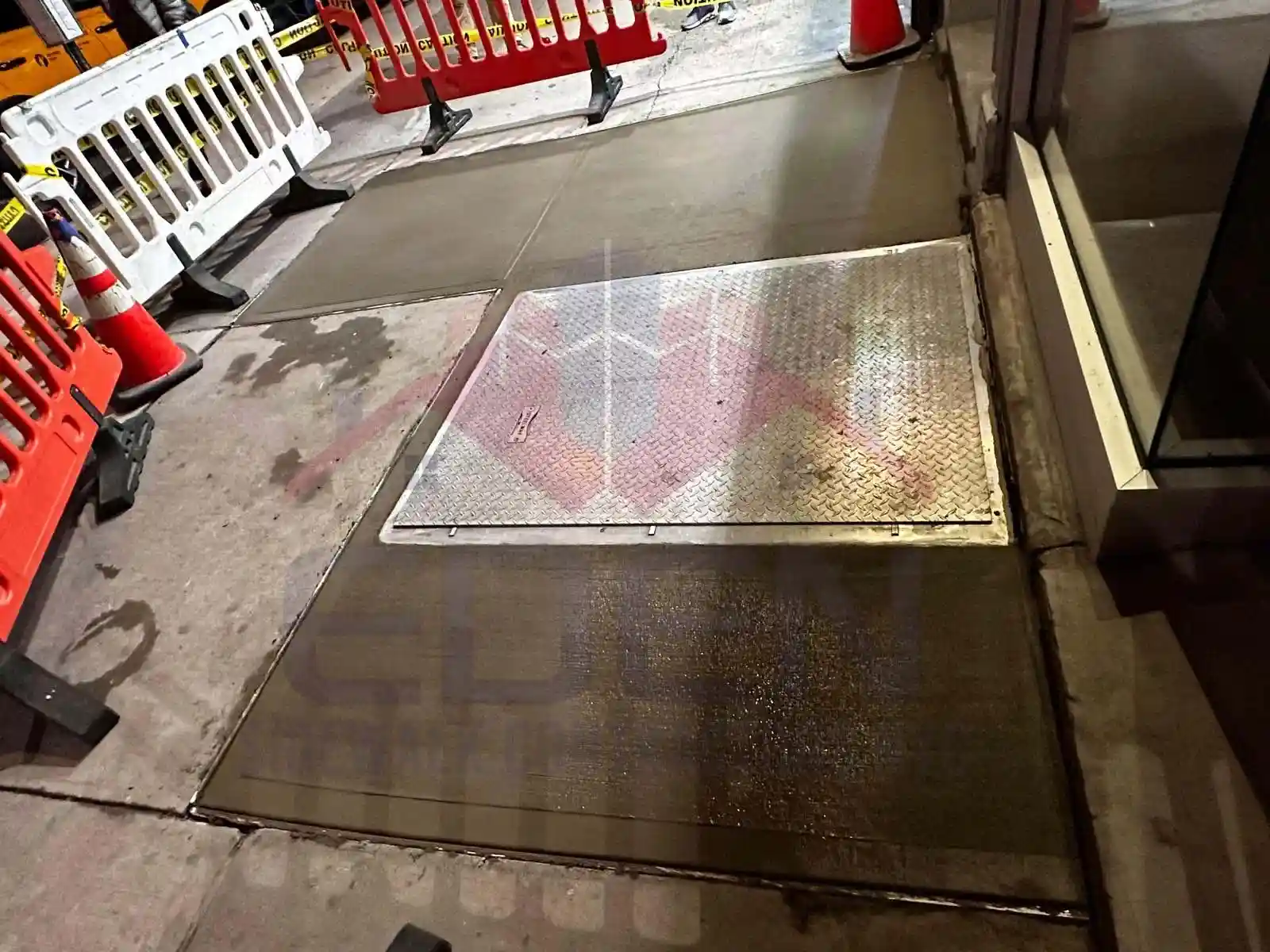
- Sidewalk Closing Permit, to stage a safe work zone on a residential block
- 811 Utility Mark-Out Ticket, filed ahead of excavation to flag buried utility lines
- NYC Landmarks Preservation Commission approval for material selection, confirming the replacement concrete’s finish and scoring pattern would preserve the character of the historic district
The Parks and LPC approvals were the long poles here. DOT permitting for a straightforward slab replacement moves quickly; a tree work permit and a landmarks material review do not, and both are needed to clear before demolition could start.
Protecting the Tree While the Work Was Underway
Once approvals were in hand, we fenced the tree’s protected root zone separately from the general work zone, so equipment and foot traffic around the site couldn’t compact soil the tree depended on. Pedestrian access on the block was maintained throughout with a secured walkway, and the crew worked in a sequence that kept the tree’s canopy and trunk undisturbed even while root work was happening at grade.
The Replacement Process We Followed
Here is the sequence we used to get the sidewalk back to grade without setting up a repeat of the same problem.

Step 1: Demolition limited to root-affected slabs
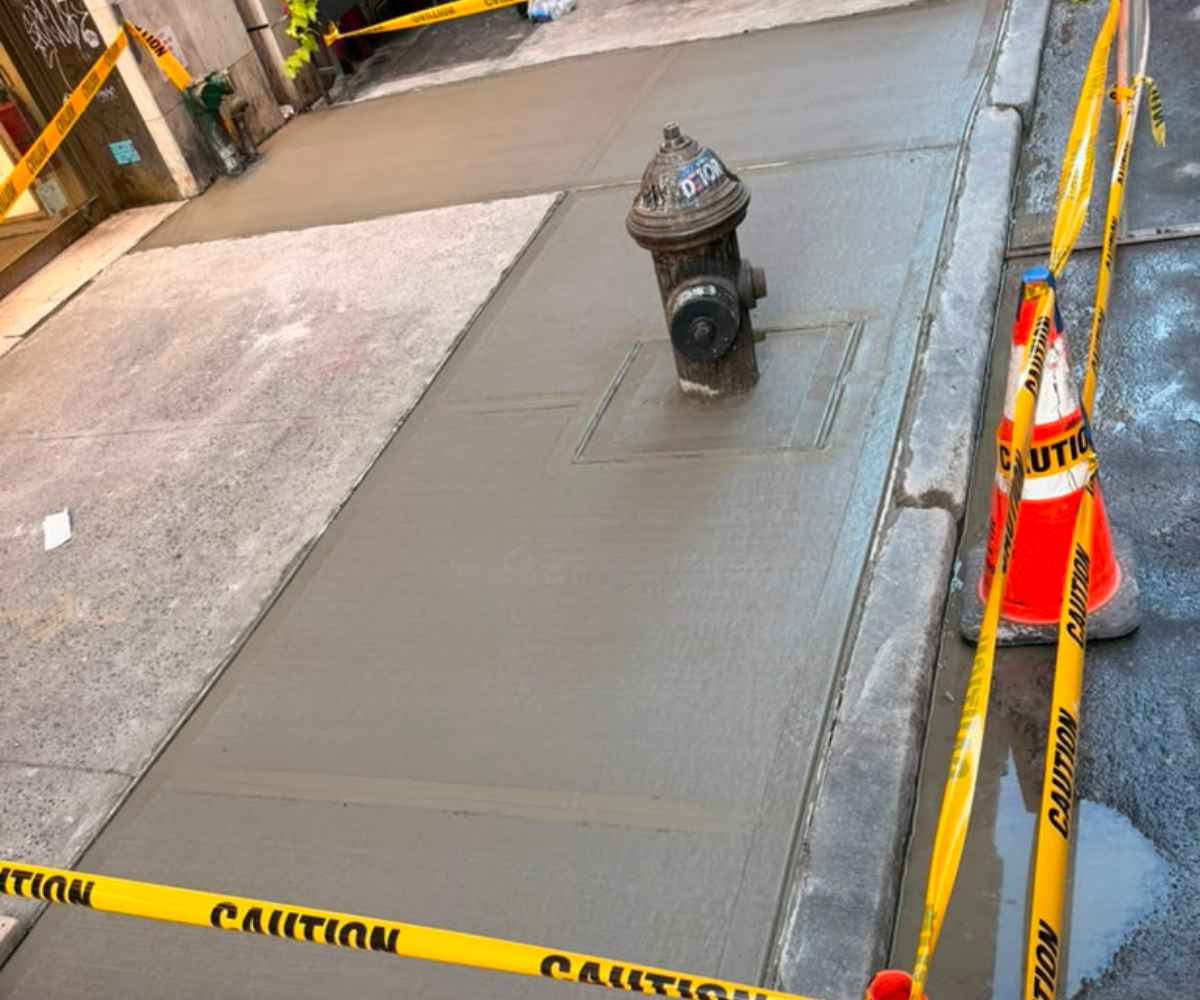
We removed only the 11 slabs showing heaving, cracking, or root contact. Slabs outside that zone were left untouched, which kept the footprint of disruption on a residential historic block as small as the repair allowed.
Step 2: Authorized root pruning
With the Parks Department permit in hand, we pruned back the specific roots causing the uplift, with the help of a certified arborist cutting only what the permit authorized and leaving the rest of the root system intact. Over-pruning a mature street tree to solve a sidewalk problem can destabilize the tree itself, so the cuts were limited to what was actually displacing the slabs.
Step 3: Root barrier installation
A root barrier was set along the property-side edge of the repair zone, angled to direct future root growth downward and away from the new concrete instead of back up into it. This is the step that keeps this from being a repair the homeowner has to redo in five years; without a barrier, the same root system tends to find its way back to the surface along the same path.
Step 4: Subgrade and base rebuilt around the root zone
We excavated to subgrade, cleared loose and disturbed soil left behind by the root growth, and rebuilt a compacted base to standard NYC sidewalk depth. Working around live roots outside the pruned zone meant hand-excavating sections a machine would normally clear in minutes, but it kept the rest of the tree’s root structure undisturbed.
Step 5: Pour and finish matched to landmark specifications
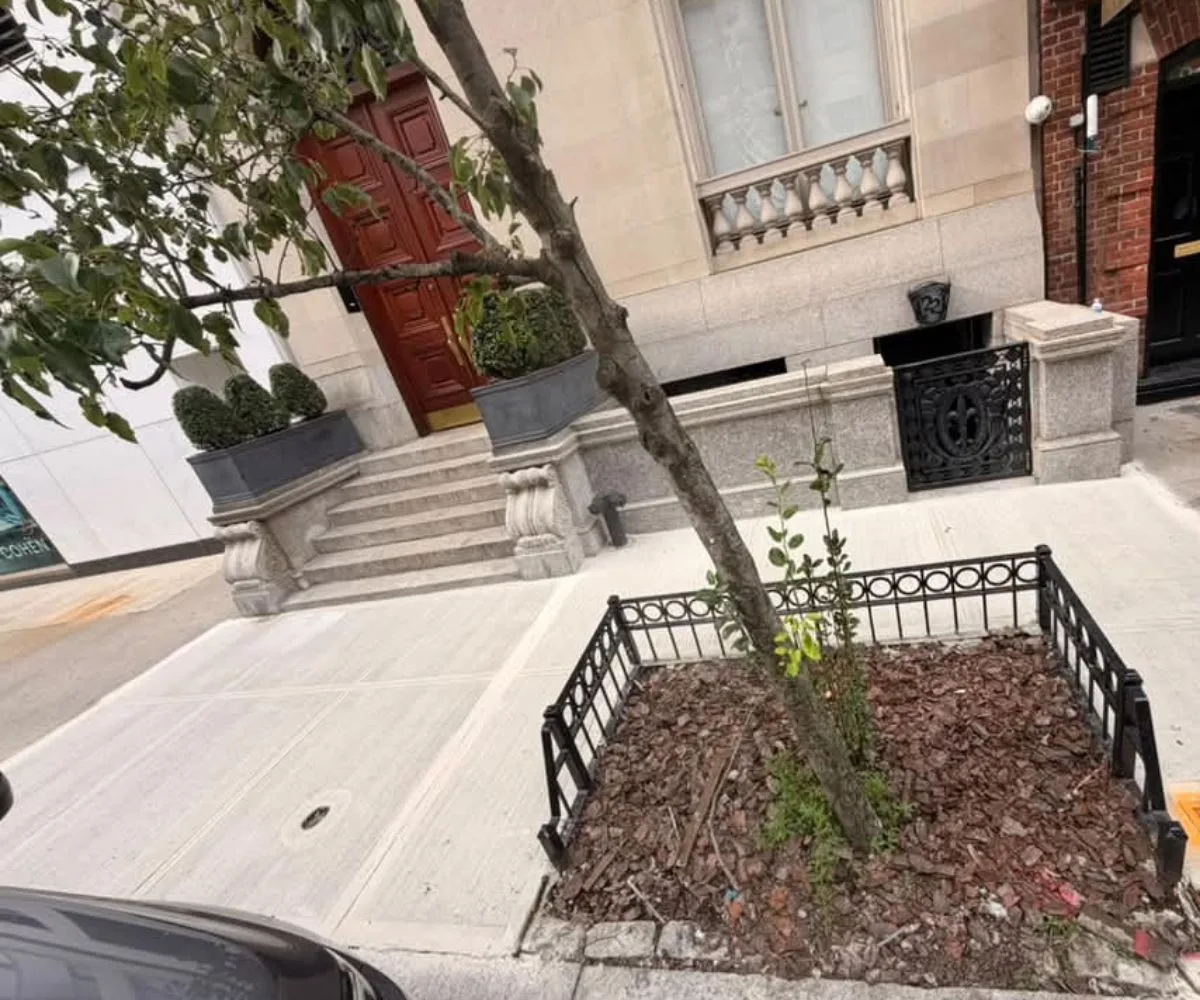
The replacement slabs were poured and finished using the concrete mix, scoring pattern, and surface treatment approved by the LPC for this district. In a historic district, the finish is not a cosmetic afterthought. It is part of what was reviewed and approved before the pour, and it has to match the surrounding streetscape closely enough that the new sidewalk doesn’t read as an obvious patch.
Step 6: Cure time before reopening to foot traffic
The new slabs were protected and closed to foot traffic through the curing period rather than reopened on a fixed date. Opening a sidewalk to regular use before it has cured invites the same kind of premature cracking we were there to fix in the first place.
Step 7: Closing out DOT, Parks, and LPC approvals
Once the concrete had cured, we coordinated final inspections across all three agencies and filed for close-out, clearing the project without further action required from the homeowner.
The Result

Eleven slabs were replaced on a rebuilt base, a root barrier was in place to keep the same tree from lifting the new concrete again, and a finish that matches the historic character of the block was approved through the same commission that protects it. The street tree stayed healthy and in place throughout, and the homeowner cleared every agency sign-off without a single stop-work order along the way.
Client Testimonial
“I was worried that fixing the sidewalk would mean losing the tree or fighting landmarks for months over the concrete finish. Neither happened. They handled the Parks permit, the LPC approval, and the actual repair, and the sidewalk looks like it belongs in front of a townhouse this old.”
Tree Roots Lifting Your Sidewalk? We Handle the Approvals, Not Just the Concrete
A root-damaged sidewalk in a historic district involves more than pouring new concrete. It means coordinating DOT, NYC Parks, and, where applicable, the Landmarks Preservation Commission, before any work can start. Eden Sidewalk Repair manages the permitting, the tree work, and the reconstruction so the tree stays healthy and the repair holds.
Have a sidewalk damaged by tree roots on a landmarked or historic block? Contact us today for an inspection and repair estimate.
Call: 718-577-5999 Schedule a Consultation