
A SoHo Sidewalk Repair and DOT Violation Sign-Off Outside 208 Grand Street
Kamwo Meridian Herbs has been on Grand Street since 1973, and the sidewalk out front has been working the whole time. By the time Eden Sidewalk Repair NYC got involved, years of foot traffic had worn the concrete at 208 Grand Street down to the point where 14 slabs, about 350 square feet, had to be replaced.
The owner needed more than a nicer-looking walkway. There was also an NYC DOT violation on the property, so the repair and the city paperwork had to move forward as one job.
Project Snapshot
- Client: Commercial property owner
- Address: 208 Grand Street, New York, NY 10013
- Area: SoHo, Manhattan
- Repair area: About 350 square feet
- Slabs replaced: 14
- Cause of damage: Heavy pedestrian traffic and general wear and tear
- Cost: About $8,200, with required permits included
- Timeline: Up to 60 days, covering approvals, construction, inspection, and violation sign-off
A Sidewalk That Never Gets a Rest
Grand Street ties together stores, restaurants, markets, medical businesses, and neighborhood services, and people use it all day to reach nearby streets, transit stops, and apartment buildings. Local research on pedestrian activity in the area found especially heavy movement on weekday mornings, midday, and evenings, plus weekend afternoons and early evenings. Visitors also cross between SoHo, Little Italy, and Chinatown on foot, many of them around the corners of Grand, Mott, Canal, and Mulberry Streets.
Kamwo adds to that load. The store is open to customers throughout the week and serves both the general public and Traditional Chinese Medicine practitioners. Its location also houses the Grand Meridian Clinic, which offers acupuncture, herbal medicine, and other TCM services. Customers stop at the door, deliveries pull up, and neighbors pass by, so this is a working commercial frontage, not a quiet residential block.
The store sits on Grand Street between Mott and Elizabeth Streets, with other businesses right next door. Older local coverage described the area as a commercial stretch of shops and food businesses, and the Think Chinatown directory still lists Kamwo alongside other food and retail businesses nearby.
Why Patching Wasn’t an Option
The damage was too widespread for small repairs. Fourteen slabs had to come out and be replaced, which also gave the crew a chance to inspect and prepare the ground underneath instead of covering over existing problems. The goal was a consistent walking surface that could handle the daily demands of a busy commercial sidewalk, not a mix of old concrete and scattered patches.
Planning Around an Open Storefront
The sidewalk stayed a public pedestrian route while the business kept running. Customers still needed to reach the store, people still needed to walk the block, and neighboring businesses kept receiving deliveries. The work area was organized carefully for both demolition and concrete placement, which mattered even more given the weekday commuting and shopping crowds and the busy weekend afternoons documented in local studies.
The repair also required city permits before any construction could begin. We coordinated the sidewalk repair and sidewalk closing requirements and included the permit costs in the $8,200 price. Handling this ahead of demolition kept the job organized and lowered the risk of delays from incomplete paperwork.
How the Work Went

- Inspection. We reviewed the frontage and determined that 14 slabs, about 350 square feet, needed replacement.
- Requirements and permits. The sidewalk repair and violation requirements were identified, and the necessary repair and closing permits were coordinated before demolition.
- Site setup. The work area was organized around an active sidewalk and commercial storefront.
- Demolition. All 14 damaged slabs were broken out and hauled away.
- Base preparation. The exposed ground was prepared to give the new concrete stable support and a proper connection to the existing pavement. The crew also watched the elevations around the repair, since even a small abrupt change in height becomes a problem when this many people walk the same spot.
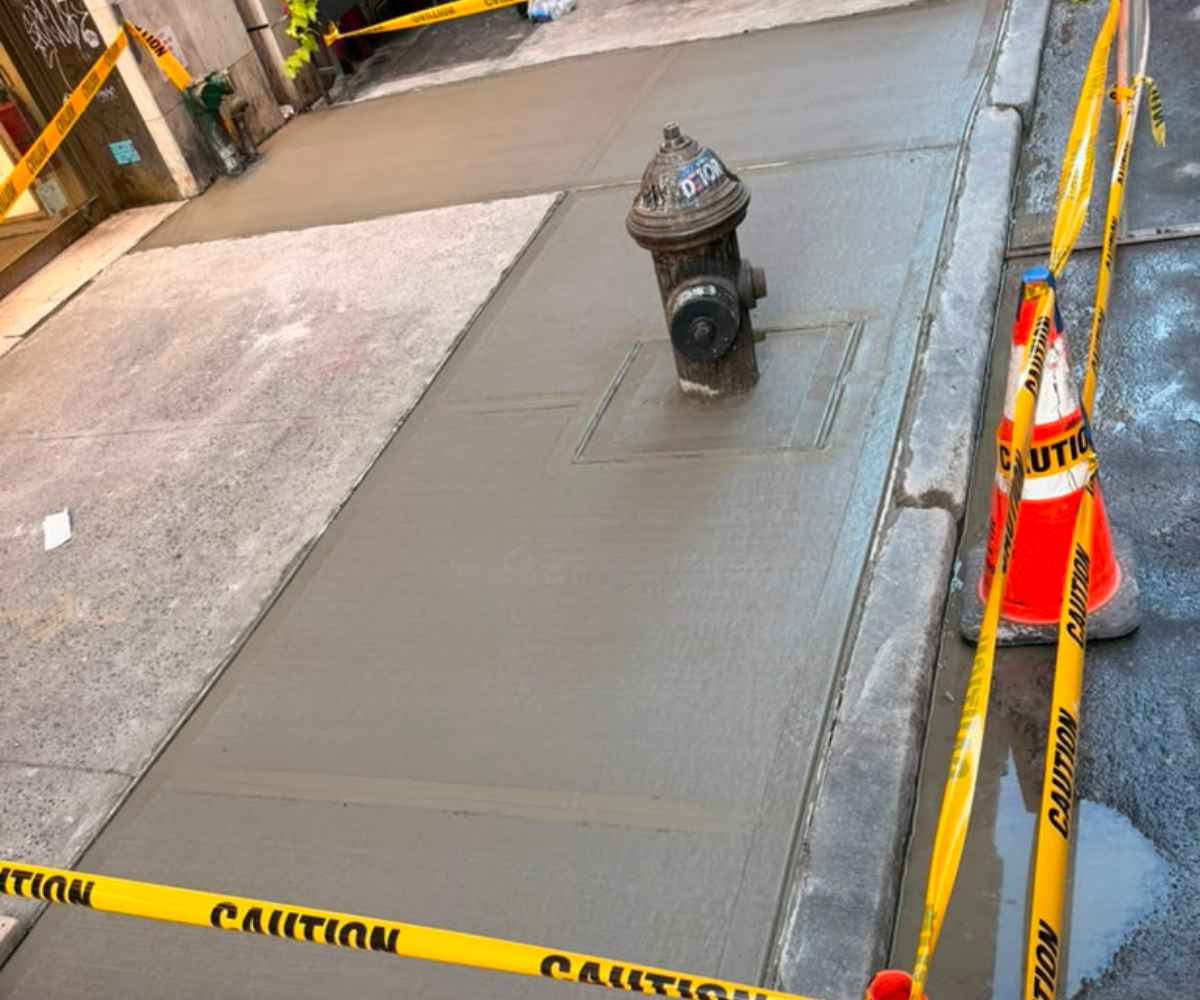
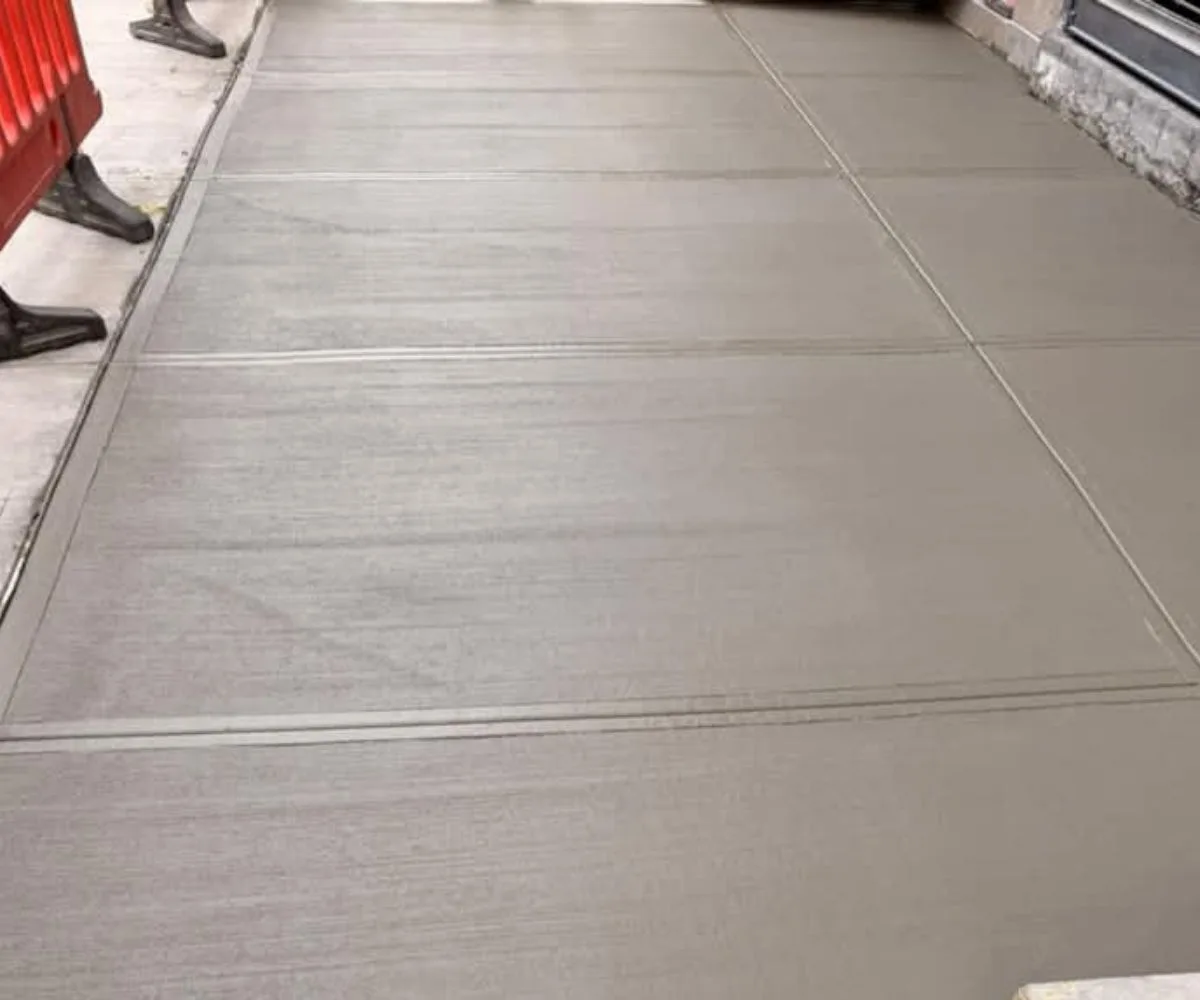
- New concrete. Concrete was placed across the full repair area and finished to connect with the surrounding sidewalk, giving the property one continuous repaired section along its frontage.
- Cleanup. Debris was cleared and the area was prepped for inspection.
- Inspection and sign-off. The finished work was submitted for the required city inspection and followed through the review and NYC DOT violation clearance.
That last step is what separated this job from a standard repair. We carried the project through the city process so the owner didn’t have to work out the inspection steps alone.
The Challenge
The main difficulty was completing a fairly large repair in a busy commercial part of the neighborhood while everything around the site kept operating. Pedestrians couldn’t simply stop for construction, and the violation meant the work had to pass through inspection and sign-off, not just be finished. Handling construction and compliance together kept the process simpler for the owner.
The Result

Fourteen damaged slabs covering about 350 square feet were replaced outside 208 Grand Street, addressing the deterioration caused by years of pedestrian use and general wear. The cost came to about $8,200 with required permits included, and the process took up to about 60 days from approvals through violation sign-off. The work was planned around the real conditions on site: a commercial sidewalk used every day by customers, pedestrians, deliveries, and neighboring businesses.
From the Property Owner
“The team handled the permits, replaced all 14 sidewalk slabs, and took care of the inspection and violation sign-off. They kept the work organized despite the busy pedestrian traffic on Grand Street. It made the whole process much easier for us.”
Conclusion
Every NYC sidewalk project has its own circumstances. At 208 Grand Street, the problem was not an isolated crack outside a quiet property. The sidewalk runs through an active SoHo commercial corridor, directly in front of a long-established herbal pharmacy and clinic, and years of daily use had worn it down. Replacing 14 slabs across about 350 square feet gave the property a cleaner, more consistent walking surface, and coordinating the permits, construction, inspection, and violation sign-off let the owner resolve the whole issue through one project.
Have a damaged sidewalk or an open DOT violation? Contact us for an inspection and repair estimate.
Call: 718-577-5999 Schedule a Consultation