
Commercial Sidewalk Repair and DOT Violation Removal at 25 W 32nd St, Koreatown, Manhattan, NY
A DOT-violated commercial sidewalk in one of Manhattan’s busiest retail corridors, fully replaced in under a week without closing pedestrian access to a single storefront.
Project Overview
- Location: 25 W 32nd St, Koreatown, Manhattan, NY 10001
- Property type: Commercial property including a café, spa, skincare center, and other customer-facing businesses on the frontage
- Issue: DOT violation for slab failure caused by continuous pedestrian traffic and weather exposure
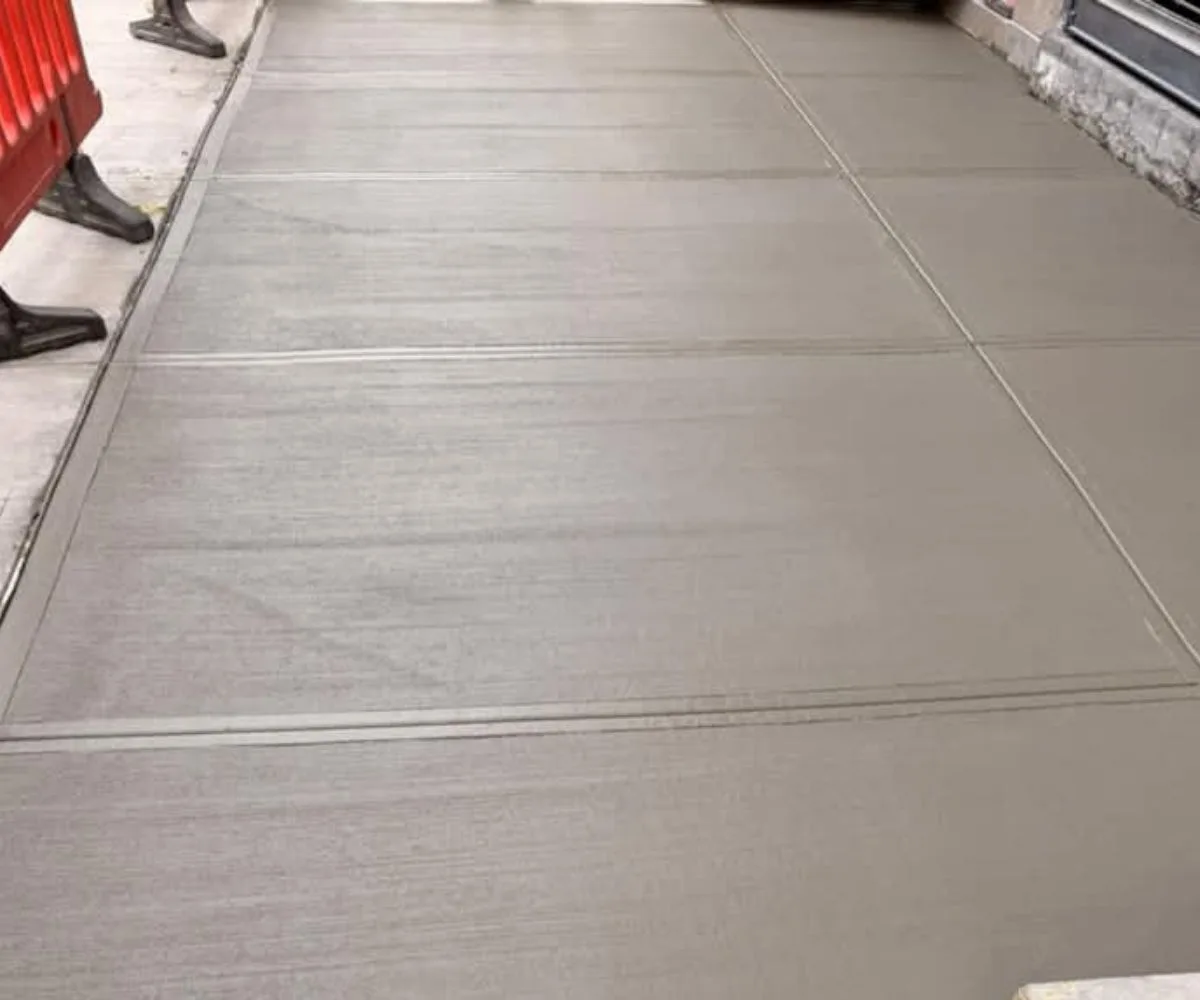
- Scope: 14 slabs, roughly 350 sq ft
- Permits: Sidewalk Repair Permit, Sidewalk Closing Permit, 811 Utility Mark-Out Ticket
- Estimated cost: About $7,000, permits included
- Timeline: Construction completed on-site with staged access; violation dismissal and sign-off coordinated after cure
- How they found us: Google search
The Challenge
The city had issued a DOT violation against the sidewalk fronting a row of customer-facing businesses in Koreatown, one of Manhattan’s highest-footfall districts. Under NYC Administrative Code §7-210, sidewalk liability sits with the property owner, so the violation came with a hard deadline.
The concrete work itself was straightforward. The real problem was access. A standard sidewalk closure would have cut off walk-in customers from every business on that stretch of W 32nd Street for the length of the project, a cost most contractors leave out of the plan.
How Eden Assessed the Site
Our inspection found damage spread evenly across all 14 slabs rather than concentrated in a few weak spots, which ruled out spot patching. Because the neighboring businesses live on steady walk-in traffic, we mapped the pedestrian route first and built the construction sequence around it, looking for a path that would keep foot traffic moving without funneling anyone into the active work zone.
Here is how we execute the repair plan.
Inspection and Estimate
We walked the frontage, mapped the damage slab by slab, confirmed the scope at roughly 350 square feet, and priced the job at about $7,000, including permits.
Permits and Utility Coordination
Before any concrete came out, we filed for:
- Sidewalk Repair Permit that is the baseline DOT authorization for replacement work
- Sidewalk Closing Permit required to legally stage a work zone on an active commercial sidewalk
- 811 Utility Mark-Out Ticket that is submitted ahead of excavation to flag buried utility lines
Keeping the Frontage Open
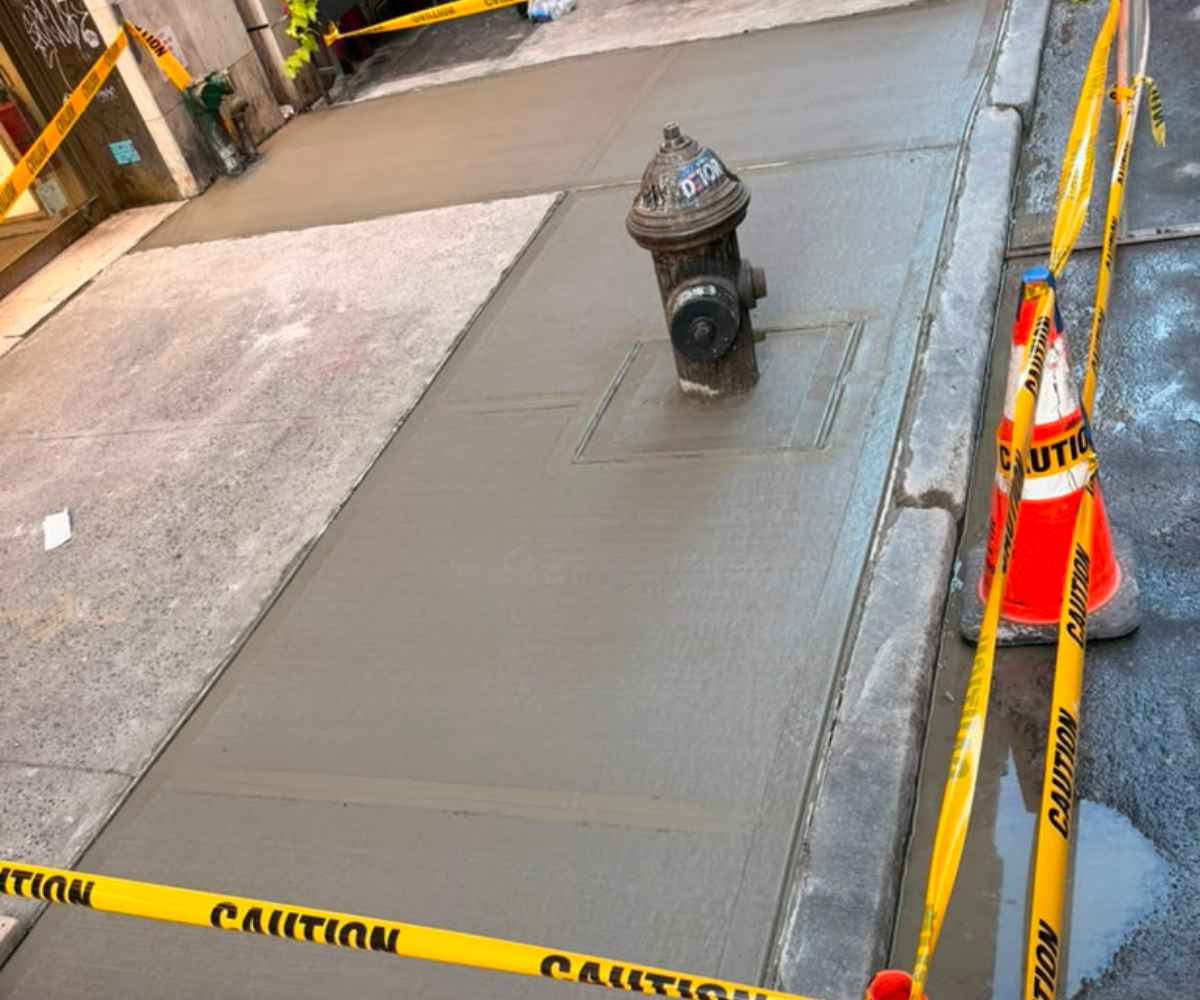
Instead of closing the sidewalk, the crew secured the work zone behind a barrier and held a five-foot temporary walkway open past the property for the entire project. Customers reached the café, spa, and skincare center throughout demolition, base compaction, and the pour, separated from the work, never rerouted around the block.
The Replacement Process We Followed
Here is how our crew played with concrete in site.
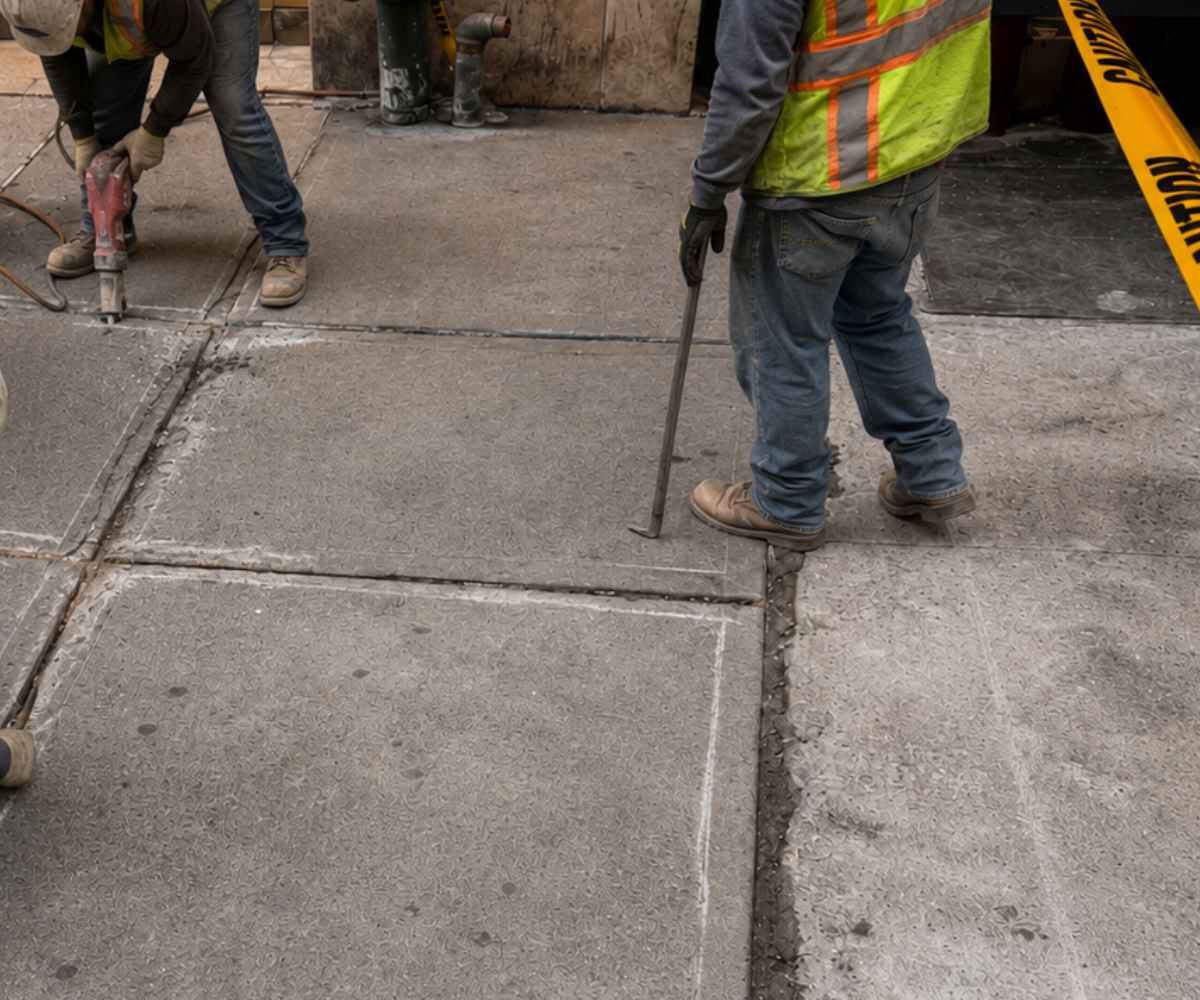
Step 1: Demolition scoped to the damage
We removed all 14 failed slabs and nothing beyond them. Pulling up sidewalk sections that are still sound adds cost and disruption without adding durability, and on a commercial frontage every extra square foot of demolition is extra time the walkway is under construction.
Step 2: Excavation and subgrade prep
With the old concrete out, we excavated down to the subgrade, the native soil the whole sidewalk system rests on. This step does more work than it looks like it does. Pour a new slab over a subgrade that’s uneven, loose, or holding water, and the new concrete inherits the old failure mode on a delay. We graded the subgrade level and cleared out loose and unstable material before building anything on top of it.
Step 3: A 4-inch compacted base
The base sits between the subgrade and slab, spreading the foot traffic load so the concrete above isn’t flexing. We built ours to a 4-inch compacted depth, standard for NYC sidewalk work under typical soil and traffic conditions per DOT specifications.
Depth is only half of it. Compaction is what gives a base its strength, because it drives out the air gaps and settling potential that let a base shift over time. A loose 4-inch base and a compacted 4-inch base behave nothing alike under the same slab, one holds, the other gradually settles under years of foot traffic.
Step 4: 6-inch reinforced concrete instead of the standard 4-inch
This was the decision that mattered most here. A residential sidewalk slab in NYC typically runs 4 inches. We poured this one at 6 inches with reinforcement, because load capacity doesn’t scale in a straight line with thickness, since a modest increase buys a disproportionately large jump in the continuous load a slab can carry before it fatigues.
A café, spa, and skincare center generate a fundamentally different load profile than a residential block. There’s no seasonal lull, no quiet stretch where the concrete gets a break. Rebuilding to the same 4-inch spec that already failed would have set the property up to fail again, just on a longer timeline. The 6-inch reinforced pour matches the slab to the traffic it actually carries.
Step 5: Pour, screed, and finish
With the base compacted and the forms set, we poured, screeded level, and finished to match the surrounding sidewalk grade. Joint placement and slab alignment were planned before the pour rather than adjusted after, control joints have to be positioned to steer where the concrete cracks as it cures, which keeps any future hairline cracking cosmetic instead of structural.
Step 6: Cure time before reopening
Concrete gains most of its strength in the first several days and keeps curing for weeks after that. We kept the section protected and closed to foot traffic until it reached sufficient strength, rather than reopening on a fixed calendar date. Reopening early is one of the most common ways a new sidewalk develops premature cracking, undoing the benefit of the thicker spec before real traffic ever tests it.
Step 7: Closing out the DOT violation
Once the slab had fully cured, we filed the dismissal request and coordinated the final inspection and sign-off, clearing the violation without further city involvement.
The Result
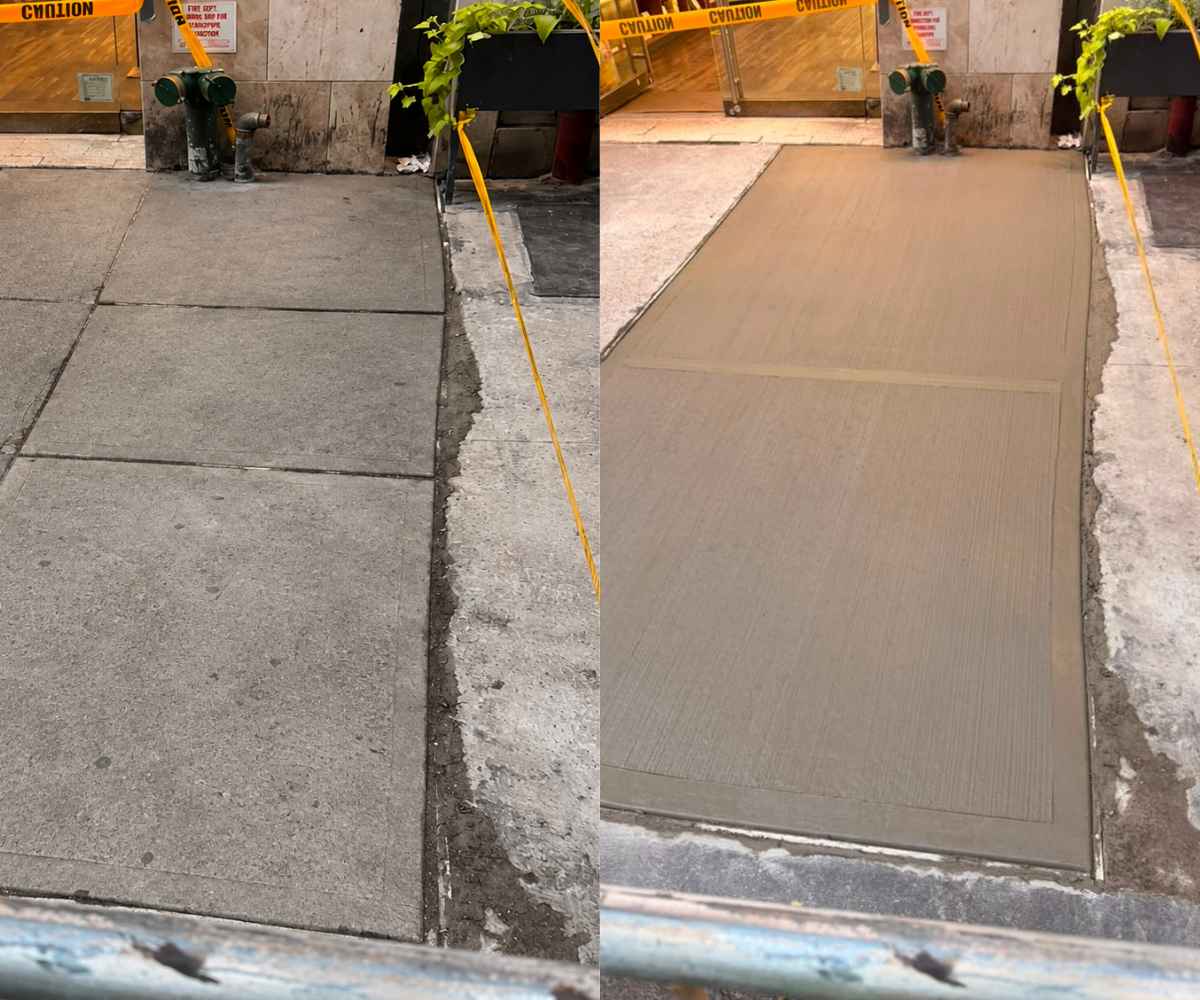
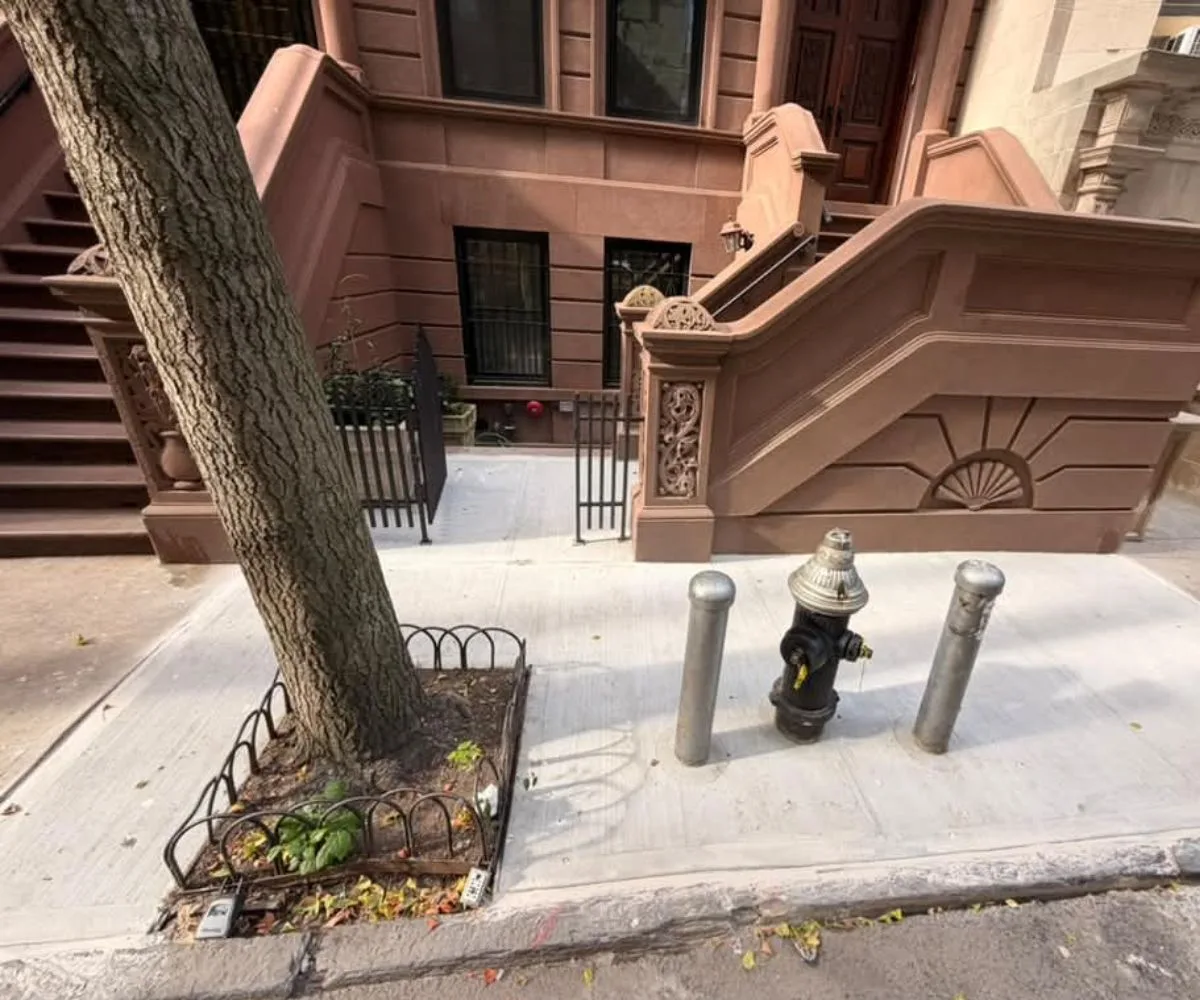
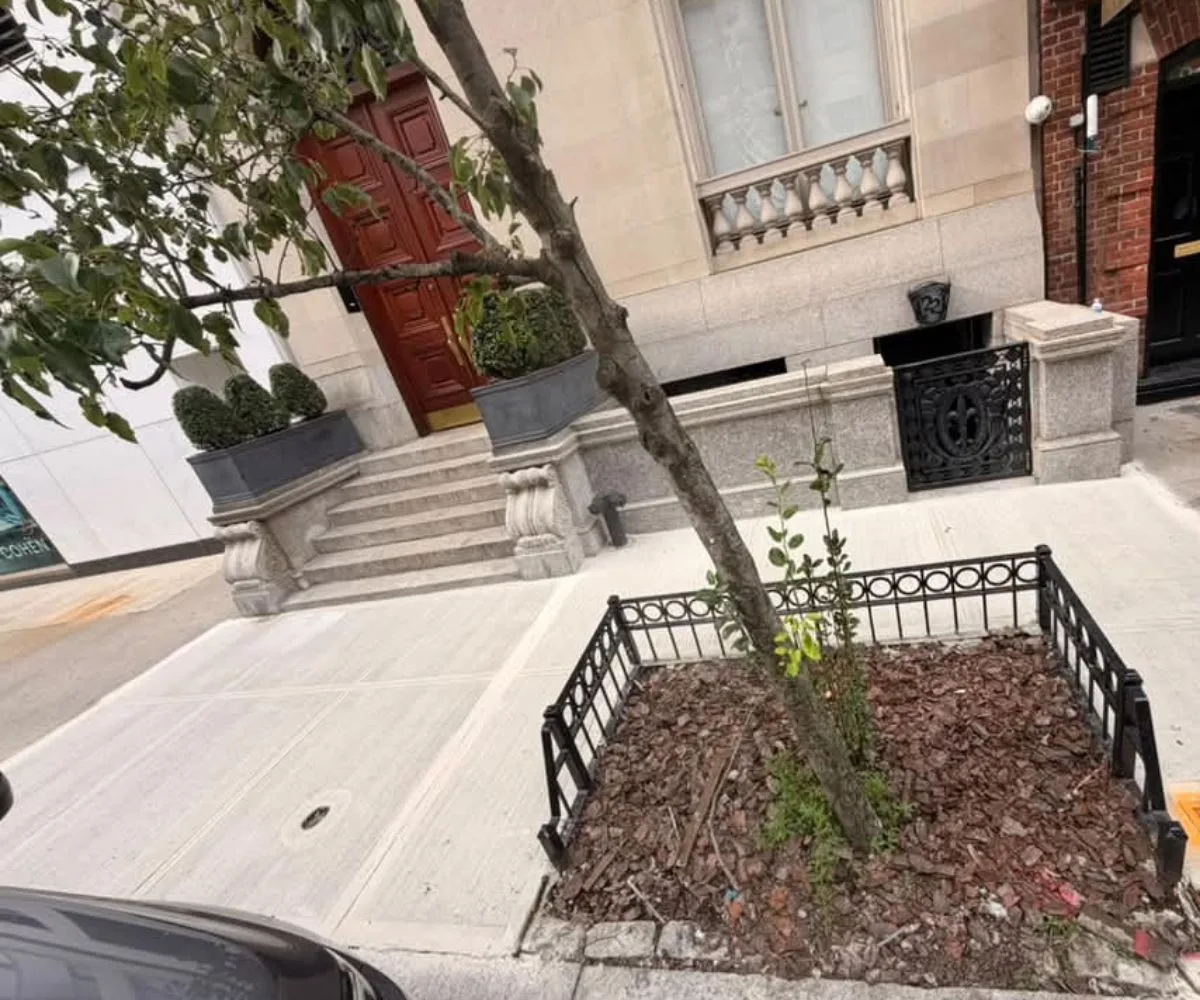
Fourteen slabs rebuilt on a properly compacted base under a 6-inch reinforced pour, sized for continuous commercial foot traffic rather than a generic residential spec, with the storefronts open the whole time.
None of that is visible to someone walking over it. It’s the difference between a sidewalk that fails again in a few years and one built for the load it actually carries.
Client Testimonial
“We couldn’t afford to have customers turned away from a closed sidewalk, and they understood that from the first call. The walkway stayed open the entire time, the work got done fast, and the violation is officially cleared.”
Busy Sidewalk? We Plan Around Your Business
Commercial sidewalk repair in Manhattan shouldn’t mean cutting customers off from your property. Eden Sidewalk Repair handles the permits, pedestrian access, concrete replacement, and DOT violation process and plans the work around the realities of a busy commercial location.
Have a damaged or violated commercial sidewalk? Contact us for an inspection and repair estimate.
Call: 718-577-5999 Schedule a Consultation