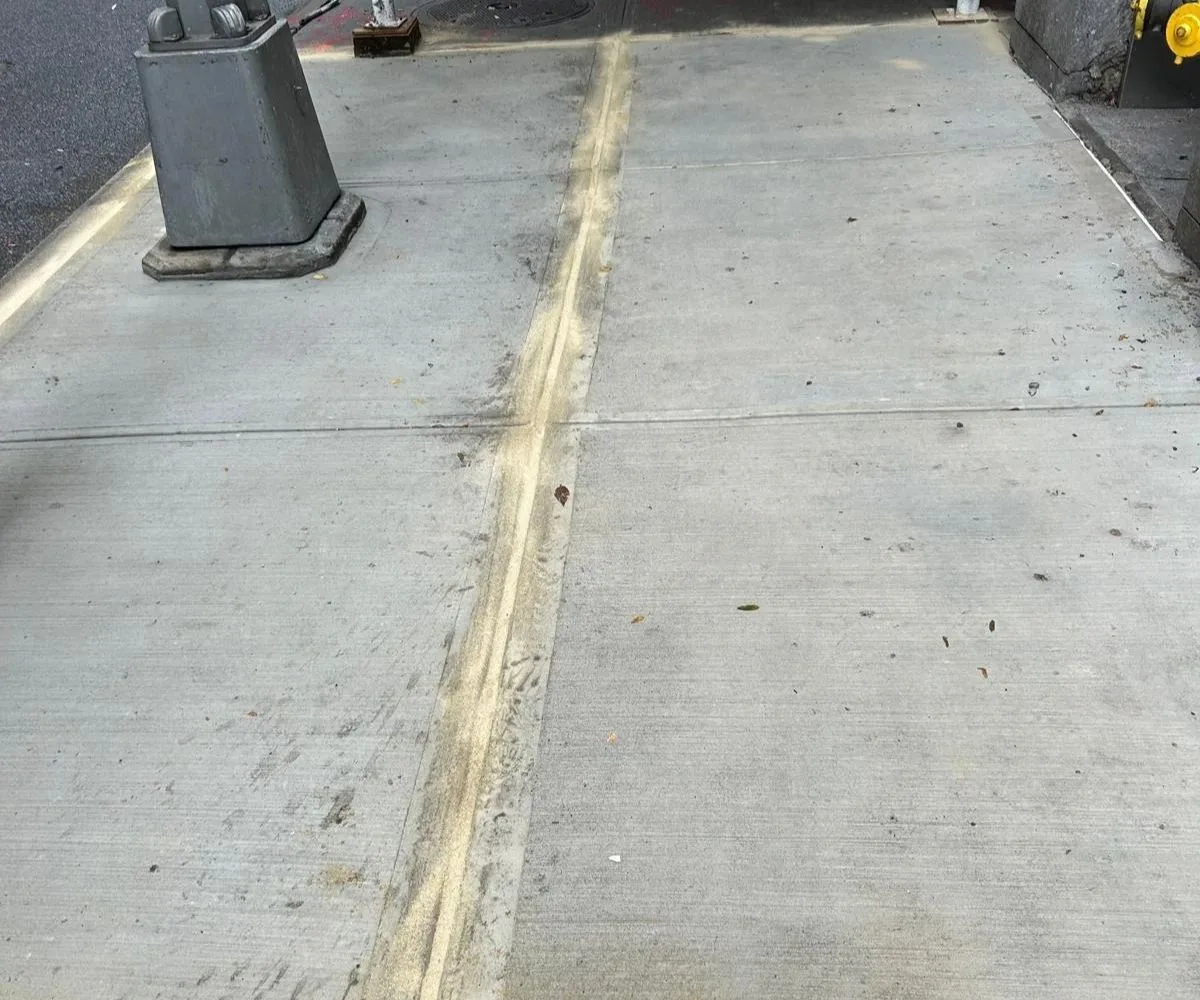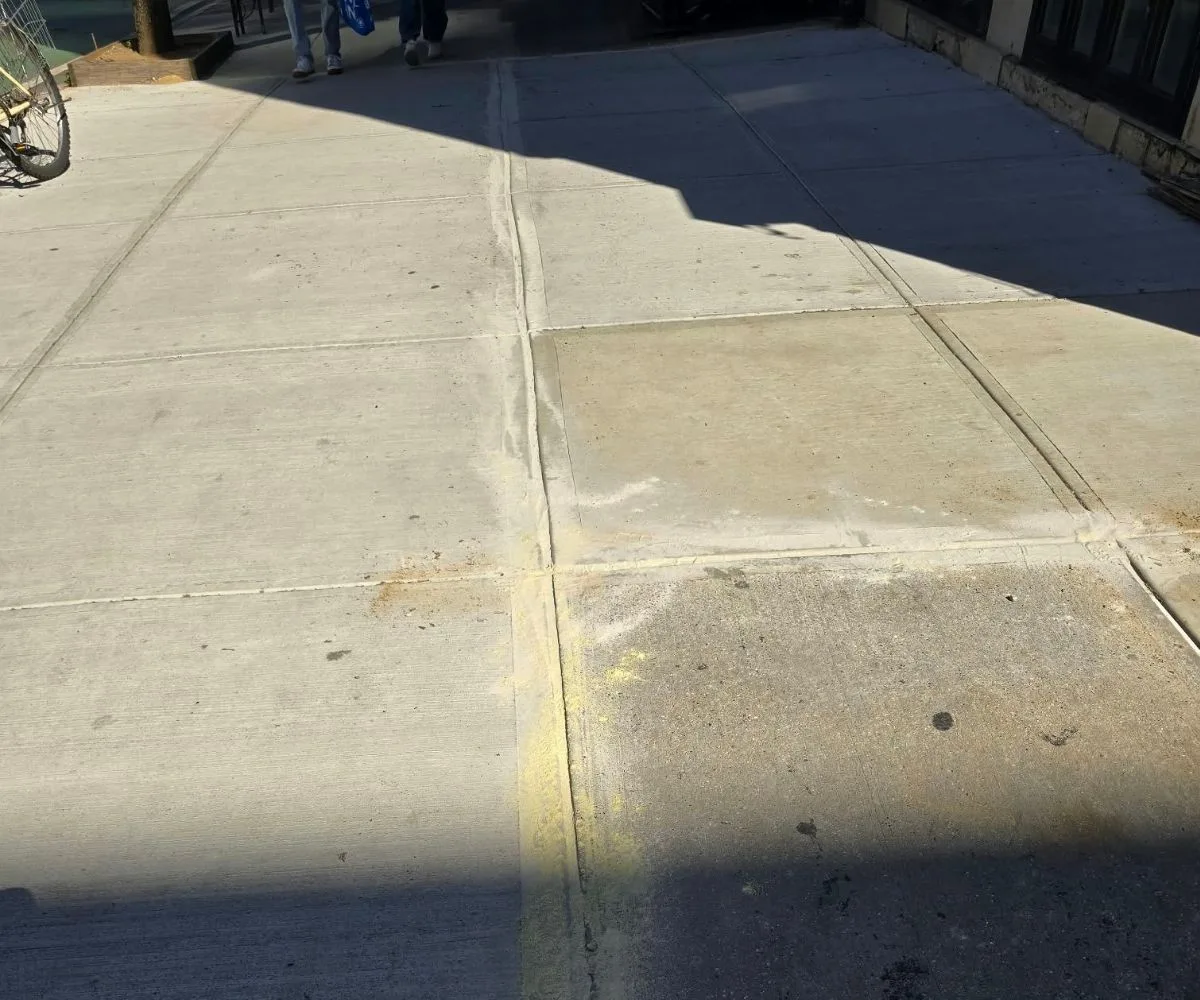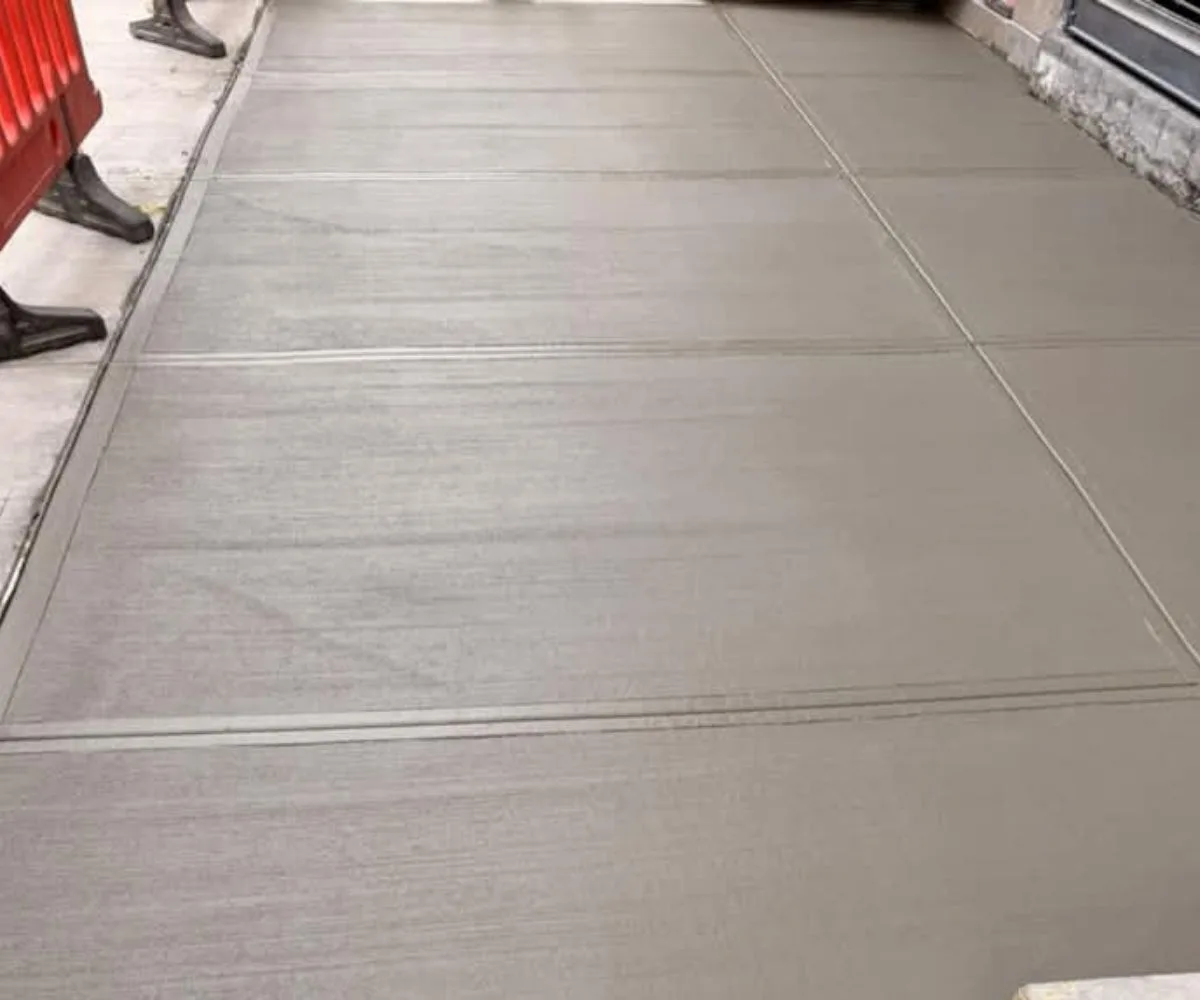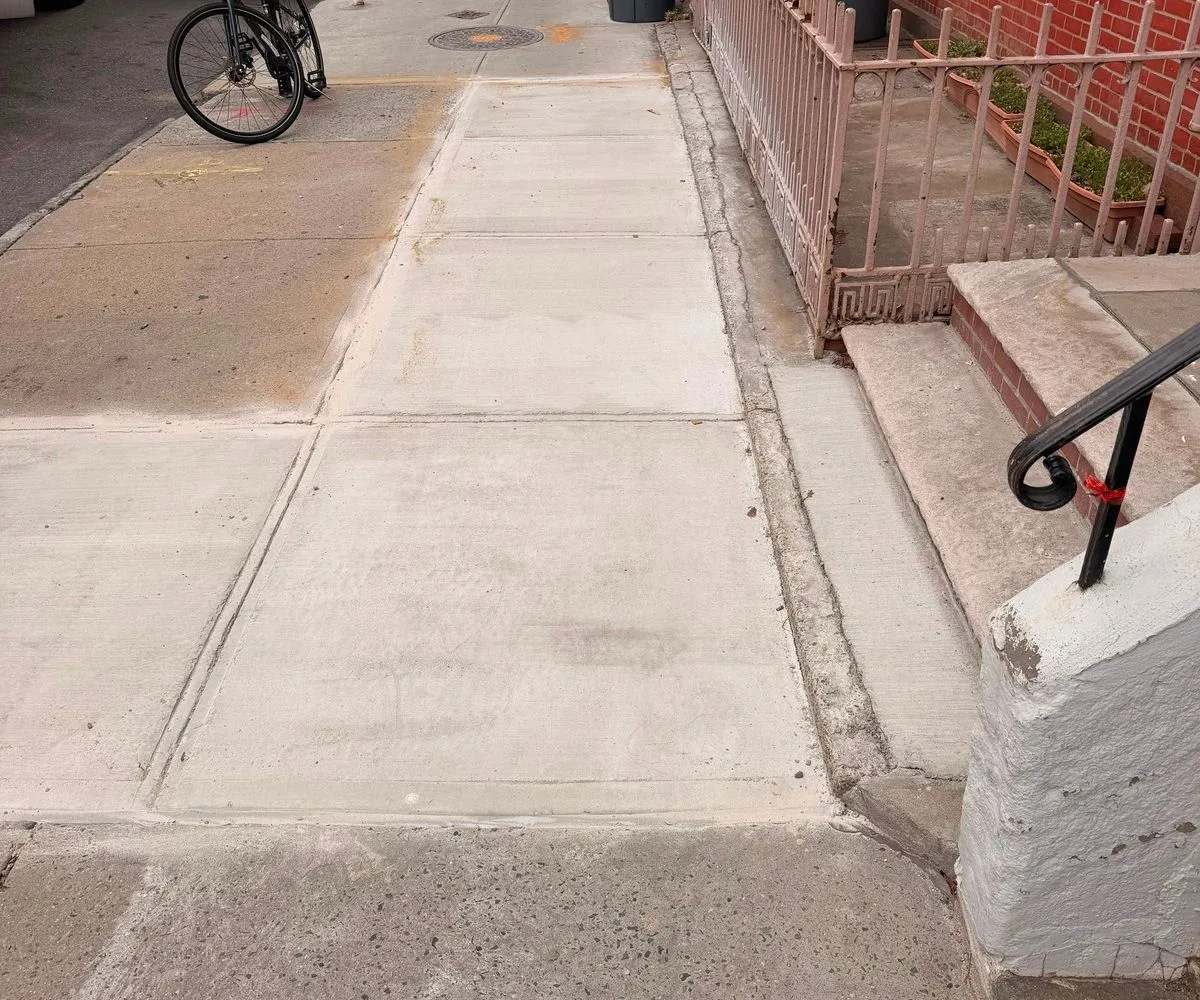

Clearing a DOT Sidewalk Violation at a Historic Greenpoint Walk-Up on Calyer Street, Brooklyn, NY, USA
A worn, heaved sidewalk beside a busy auto parts storefront, replaced slab by slab and signed off by every agency involved, with the violation closed and the block’s historic character intact.
Project Overview
- Location: 231 Calyer St, Greenpoint, Brooklyn, NY 11222
- Property type: Three-story, five-unit multifamily residential walk-up in a historic district, adjoining a NAPA Auto & Truck Parts storefront
- Issue: NYC DOT sidewalk violation for multiple heaved and cracked slabs caused by general wear and constant pedestrian traffic
- Scope: Removal and replacement of 5 slabs, approximately 125 sq ft
- Permits and approvals: NYC DOT Sidewalk Repair Permit, Sidewalk Closing Permit, 811 Utility Mark-Out Ticket, NYC Landmarks Preservation Commission (LPC) approval for material selection
- Estimated cost: Approximately $4,400, permits and approvals included
- Timeline: Up to 60 days, covering repair work, permit coordination, and sign-off from NYC DOT, Parks, and LPC
- How they found us: Referral from a neighboring homeowner in the historic district
Why a Routine Repair Came With a Violation Notice
The owner of this five-unit walk-up contacted us after NYC DOT cited the sidewalk in front of the building. Several slabs had lifted at the joints and cracked across their faces, leaving edges high enough to catch a shoe or a stroller wheel. Nothing dramatic had caused it. This was the slow kind of failure that comes from years of use on a block where people are always walking.
Under NYC Administrative Code §7-210, the property owner is responsible for the sidewalk fronting the building, and that includes the cost of repairing it. The violation put a clock on the problem. The building’s location in a historic district added a second requirement: any replacement material had to be approved by the Landmarks Preservation Commission before it went in.
Reading the Wear: How Foot Traffic Breaks Down Concrete
There was no single culprit under these slabs, such as a tree or a broken pipe. The damage followed the walking path. The most heavily used stretch, near the building entrance and the neighboring storefront, showed the worst cracking and the sharpest height differences between slabs.
Slabs on a busy block fail in a predictable way. Repeated loading works the joints loose, moisture gets into the hairline cracks, and freeze-thaw cycles pry them wider each winter. Eventually a slab tilts out of plane with its neighbor. We marked the five slabs that had failed past the point of patching and left the sound ones alone, so the repair covered only what the violation actually required.
Walking the Frontage and Pricing the Job
We measured the affected slabs on site, photographed the height differences against the DOT citation, and confirmed the scope at five slabs, roughly 125 square feet. The estimate came to about $4,400, with permit filing and the landmarks approval included, so the owner had one number to plan around instead of a stack of separate fees.
Filing Everything Before Touching the Concrete
Demolition didn’t begin until each of these was in place:
- NYC DOT Sidewalk Repair Permit: authorizes replacement of the cited slabs
- Sidewalk Closing Permit: lets us set up a protected work zone on a pedestrian route
- 811 Utility Mark-Out Ticket: flags buried utility lines before any excavation
- NYC Landmarks Preservation Commission approval: confirms the replacement concrete’s finish and scoring suit the historic district
DOT and the 811 mark-out move quickly on a job this size. The landmarks material review sets the pace, because the pour can’t be scheduled until the finish is approved.
Keeping Foot Traffic Moving Next to a Working Storefront
The building shares its frontage with a NAPA Auto & Truck Parts store, so the sidewalk couldn’t simply be shut down. Customers, residents, and passersby all needed a safe way through. We staged the work in a defined zone, kept a clear walkway open wherever the closing permit allowed, and scheduled demolition and pouring to limit noise and dust at the storefront entrance. The five-unit residential entry stayed reachable for tenants throughout.
From Broken Slabs to Finished Walk: The Five-Slab Replacement
Step 1: Marking and sawcutting the failed slabs
We cut along the boundaries of the five cited slabs so the edges of the neighboring concrete stayed clean and intact.
Step 2: Removing the old concrete and checking what lay beneath
Once the slabs were lifted out, we inspected the exposed ground. Years of settlement and moisture had left some soft spots, which we cleared and corrected before building anything back up.
Step 3: Rebuilding the base
We compacted a fresh, level base to standard NYC sidewalk depth. This is the layer that determines whether new slabs stay flat or start tilting again under daily foot traffic.
Step 4: Forming and pouring to the approved specification
We poured the replacement slabs with the mix and joint layout approved for the project, and set the slope so water drains toward the street rather than pooling at the building.
Step 5: Finishing to match the historic streetscape
The surface finish and scoring pattern followed what the LPC had approved, so the new slabs blend with the surrounding walk instead of standing out as an obvious patch.
Step 6: Curing before reopening
The new concrete was protected and kept closed to foot traffic until it had cured. Reopening too early is a common cause of the surface cracking we were hired to fix.
Step 7: Inspections and agency close-out
After curing, we coordinated final sign-off with NYC DOT, Parks, and LPC and filed the close-out paperwork, so the owner could put the violation behind them without further follow-up.
The Outcome

Five slabs were replaced across about 125 square feet, set on a rebuilt base, and finished to a landmarks-approved specification. The heaved edges that had triggered the citation are gone, the walkway is level from the building entrance to the storefront, and the owner closed out every required approval within the 60-day window.
Owner Feedback
“I knew the violation had to be dealt with, but I didn’t expect the landmarks side of it to be so involved. They took care of the permits, the approvals, and the repair itself, and the sidewalk looks like it has always been there.”
Sidewalk Violation on a Historic Block? Let Us Handle the Filing and the Repair
A DOT violation in a historic district means more than replacing a few slabs. The permits, the street closure, the utility mark-out, and the landmarks material review all have to line up before work begins. Eden Sidewalk Repair manages that sequence from the first filing to the final sign-off, so the violation gets cleared and the repair lasts.
Received a sidewalk violation or noticed heaving slabs outside a landmarked building? Contact us today for an inspection and repair estimate.
Call: 718-577-5999 Schedule a Consultation